
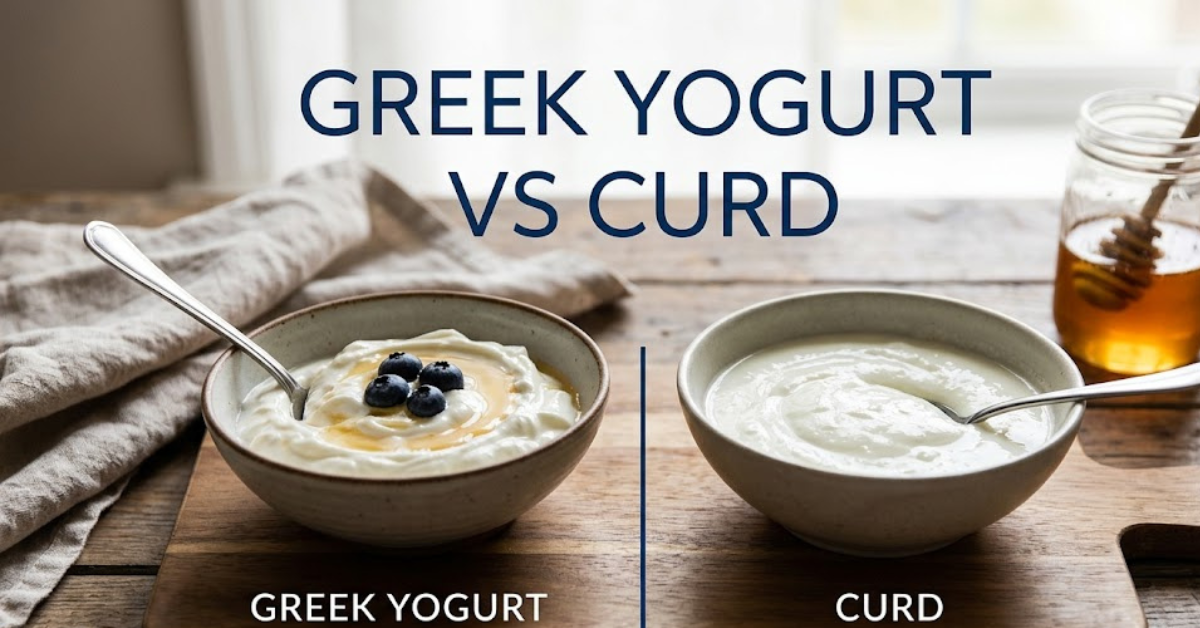

If you’ve ever stood in the dairy aisle wondering whether to pick Greek yogurt or curd, you’re not alone. The debate around Greek yogurt vs curd has become increasingly popular, especially among health-conscious eaters. While both look similar and come from milk, they’re not exactly the same.
In this guide, we’ll break down the difference between Greek yogurt and curd, covering everything from nutrition and taste to health benefits and everyday uses—so you can decide which one deserves a spot in your diet.
What Is Greek Yogurt?
Greek yogurt is a strained form of regular yogurt. After fermentation, it goes through an extra straining process that removes whey (liquid), resulting in a thicker and creamier texture.
Key Features:
- Thick, creamy consistency
- Higher protein content
- Lower lactose compared to regular yogurt
- Slightly tangy flavor
Greek yogurt is widely used in smoothies, desserts, and even savory dishes like dips and sauces.
What Is Curd (Dahi)?
Curd, also known as dahi in many South Asian households, is made by adding a natural acidic substance (like lemon juice or leftover curd) to warm milk. This triggers fermentation and turns milk into a soft, slightly sour dairy product.
Key Features:
- Softer and more watery than Greek yogurt
- Mildly tangy taste
- Made at home or bought fresh
- Contains beneficial bacteria
Curd is a staple in many traditional meals, often eaten plain or with rice.
Greek Yogurt vs Curd: Key Differences
1. Preparation Method
- Greek Yogurt: Fermented and then strained multiple times
- Curd: Fermented directly using a starter culture
2. Texture and Consistency
- Greek Yogurt: Thick, dense, and creamy
- Curd: Softer, lighter, and sometimes slightly runny
3. Nutritional Comparison
Here’s how they stack up:
Greek Yogurt:
- High in protein
- Lower in carbs
- Rich in calcium
- Great for muscle recovery
Curd:
- Moderate protein
- Higher water content
- Good source of probiotics
- Easy to digest
4. Taste Profile
- Greek Yogurt: Tangy and rich
- Curd: Mild and slightly sour
5. Digestibility
Curd is generally easier on the stomach, especially for those who are sensitive to dairy. Greek yogurt, however, is still easier to digest than regular milk due to reduced lactose.
Health Benefits: Greek Yogurt vs Curd
Benefits of Greek Yogurt
- Supports muscle growth due to high protein
- Keeps you full longer (great for weight management)
- Helps maintain gut health
- Stabilizes blood sugar levels
Benefits of Curd
- Improves digestion with natural probiotics
- Boosts immunity
- Helps cool the body (especially in hot climates)
- Supports gut flora balance
Greek Yogurt vs Dahi: Which One Should You Choose?
It really depends on your goals:
Choose Greek Yogurt if you want:
- Higher protein intake
- A thicker texture for recipes
- A snack that keeps you full longer
Choose Curd if you want:
- A lighter, more natural option
- Better digestion support
- A traditional, budget-friendly choice
Everyday Uses
Greek Yogurt Works Best For:
- Smoothies and protein shakes
- Salad dressings
- Healthy desserts
- Breakfast bowls
Curd Works Best For:
- Rice dishes (like curd rice)
- Traditional meals
- Marinades
- Cooling side dishes
FAQs
1. What is the difference between Greek yogurt and curd?
The main difference lies in texture, preparation, and nutrition. Greek yogurt is strained and protein-rich, while curd is softer and made through natural fermentation.
2. Is Greek yogurt healthier than curd?
Not necessarily. Greek yogurt has more protein, but curd offers excellent probiotics and is easier to digest. Both are healthy in their own ways.
3. Can I replace curd with Greek yogurt?
Yes, in most recipes. However, Greek yogurt is thicker, so you may need to adjust consistency.
4. Which is better for weight loss: Greek yogurt or curd?
Greek yogurt is often preferred for weight loss due to its higher protein content, which helps you feel full longer.
5. Is curd the same as yogurt?
Curd and yogurt are similar but not identical. Yogurt is made using specific bacterial cultures, while curd forms through natural fermentation.
Conclusion
When it comes to Greek yogurt vs curd, there’s no clear “winner”—only what works best for your lifestyle. Greek yogurt shines with its high protein and creamy texture, making it ideal for fitness enthusiasts. Curd, on the other hand, offers simplicity, tradition, and excellent digestive benefits.
The smartest approach? Include both in your diet and enjoy the best of both worlds. Whether you’re building muscle, improving digestion, or just looking for a tasty addition to your meals, you can’t go wrong with either option.