
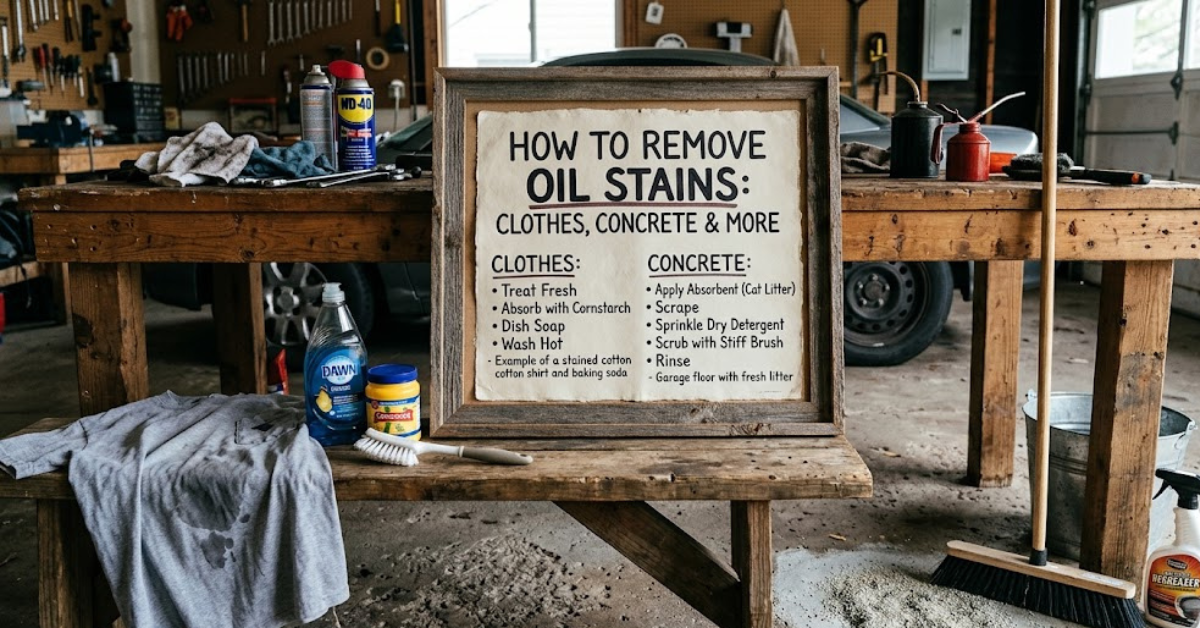

Oil stains have a way of showing up at the worst possible times—on your favorite shirt, your driveway, or even your carpet. The good news? Knowing how to remove oil stains doesn’t require expensive products or professional help in most cases. With the right techniques and a bit of timing, you can tackle even stubborn grease marks at home.
In this guide, you’ll learn practical, proven methods for dealing with oil stains across different surfaces—from clothing and fabric to concrete, asphalt, and more.
Why Oil Stains Are So Stubborn
Oil doesn’t mix with water, which is why regular washing often fails. Instead, oil binds to fibers or porous surfaces like concrete. That means you need something that can break down grease—like detergents, absorbents, or solvents.
Quick action makes a big difference. The sooner you treat a stain, the easier it is to remove.
How to Remove Oil Stains from Clothes
Dealing with grease on fabric is one of the most common challenges. Here’s a step-by-step method that works for most materials.
Step-by-Step Method
- Blot the stain immediately
Use a paper towel to absorb excess oil—don’t rub. - Apply an absorbent powder
Sprinkle baking soda, cornstarch, or baby powder. Let it sit for 15–30 minutes. - Brush it off gently
This helps lift the oil from the fabric. - Use dish soap
Apply a small amount of liquid dish soap directly to the stain. It’s designed to cut grease. - Gently scrub
Use a soft brush or your fingers. - Wash in warm water
Check the stain before drying—heat can set it permanently.
For Tough or Set-In Stains
If you’re wondering how to remove oil stains from clothes after washing, repeat the process but let the dish soap sit longer (up to 1 hour). Avoid using the dryer until the stain is completely gone.
Special Fabrics
- Jeans: Use slightly more detergent and warm water
- Delicate fabrics: Stick to mild soap and cold water
- Shirts: Pre-treat collars and sleeves where oils accumulate
How to Remove Oil Stains from Concrete and Driveways
Concrete is porous, so oil seeps deep into it. Removing stains requires both absorption and cleaning agents.
Basic Method for Fresh Stains
If you’re figuring out how to remove oil stains from concrete driveway, start here:
- Cover the stain with cat litter, sawdust, or baking soda
- Let it sit for several hours or overnight
- Sweep it up and scrub the area with dish soap and hot water
Deep Cleaning for Old Stains
For tougher stains:
- Apply a degreaser or laundry detergent
- Scrub with a stiff brush
- Rinse with hot water
- Repeat if necessary
This works well for those searching for how to remove oil stains from driveway or garage floors.
How to Remove Oil Stains from Asphalt
Asphalt is softer than concrete, so it requires a gentler approach.
- Use a mild detergent instead of harsh chemicals
- Avoid metal brushes—use nylon bristles
- Apply absorbent material first, then clean
This method is ideal for those tackling how to remove oil stains from asphalt driveway without damaging the surface.
How to Remove Oil Stains from Carpets
Carpets trap oil quickly, but you can still save them.
Easy Home Method
- Blot excess oil with paper towels
- Sprinkle baking soda and let it sit for 30 minutes
- Vacuum thoroughly
- Apply a carpet-safe detergent
- Blot with a damp cloth
Repeat until the stain disappears.
How to Remove Oil Stains from Other Surfaces
Granite
- Use a baking soda paste (baking soda + water)
- Apply and cover with plastic wrap overnight
- Wipe clean
Pavers
- Absorb oil first
- Use a pressure washer or degreaser
- Scrub thoroughly
Garage Floors
- Apply a commercial degreaser
- Scrub with a stiff brush
- Rinse with hot water
Common Mistakes to Avoid
- Using hot water first: This can set the stain in fabric
- Skipping pre-treatment: Oil needs to be broken down before washing
- Drying too soon: Heat locks in stains permanently
- Over-scrubbing delicate surfaces: Can cause damage
Pro Tips for Better Results
- Always test cleaning solutions on a small area first
- Use dish soap—it’s one of the best grease fighters
- Repeat treatments if needed; some stains require multiple attempts
- Act quickly for best results
FAQs
How do you remove old oil stains that won’t come out?
Repeat the treatment process using a strong degreaser or dish soap. Let it sit longer before rinsing or washing.
Can baking soda remove oil stains?
Yes, baking soda is highly effective for absorbing fresh oil and loosening older stains.
Does vinegar remove oil stains?
Vinegar can help, but it’s not as effective as dish soap or baking soda for grease.
What is the best way to remove oil stains from clothing?
Blot the oil, apply baking soda, treat with dish soap, and wash before drying.
How do you remove oil stains from a driveway?
Use absorbent material first, then scrub with detergent or a degreaser and rinse thoroughly.
Conclusion
Learning how to remove oil stains is all about using the right method for the right surface—and acting quickly. Whether you’re dealing with clothes, carpets, or concrete, simple household items like baking soda and dish soap can go a long way.
The key takeaway? Don’t panic when oil spills happen. With a little patience and the techniques above, you can restore your surfaces and fabrics to their original condition.