
Imagine walking into a room so silent that you can hear your own heartbeat, your breathing, and even the faint movement of your joints. For most people, complete silence sounds peaceful. But in reality, it can become deeply uncomfortable within minutes. That’s exactly why the question “what is the quietest place on earth?” fascinates scientists, travelers, and curious readers alike.
The quietest place ever created is not a remote cave or a hidden forest. It’s a specially designed laboratory built to absorb almost every sound humans can hear. This extraordinary room has challenged people’s senses and changed the way researchers understand silence.
The Quietest Place on Earth Explained
The title of the world’s quietest place belongs to the anechoic chamber at Microsoft’s headquarters in Redmond, Washington. This room was officially recognized for having the lowest measurable background noise ever recorded.
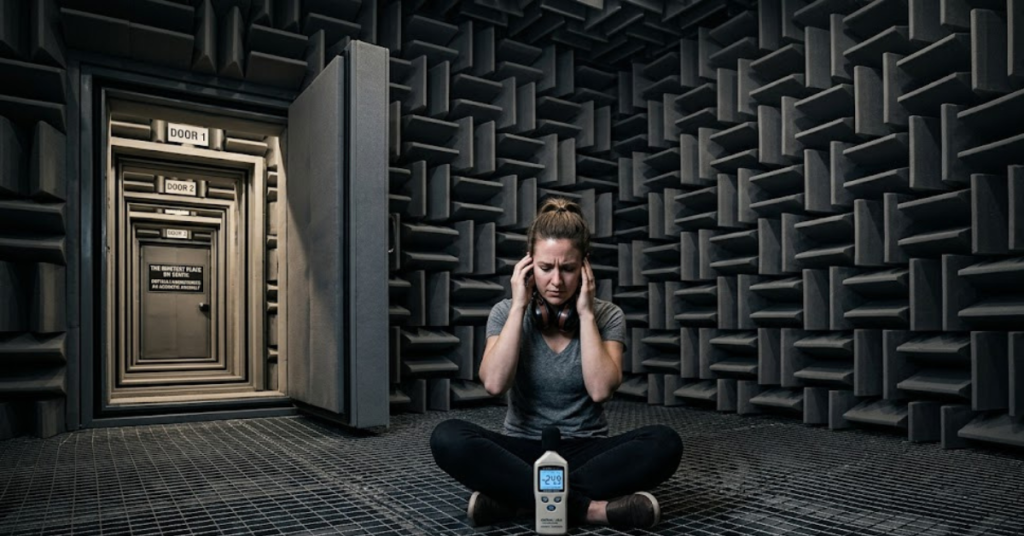
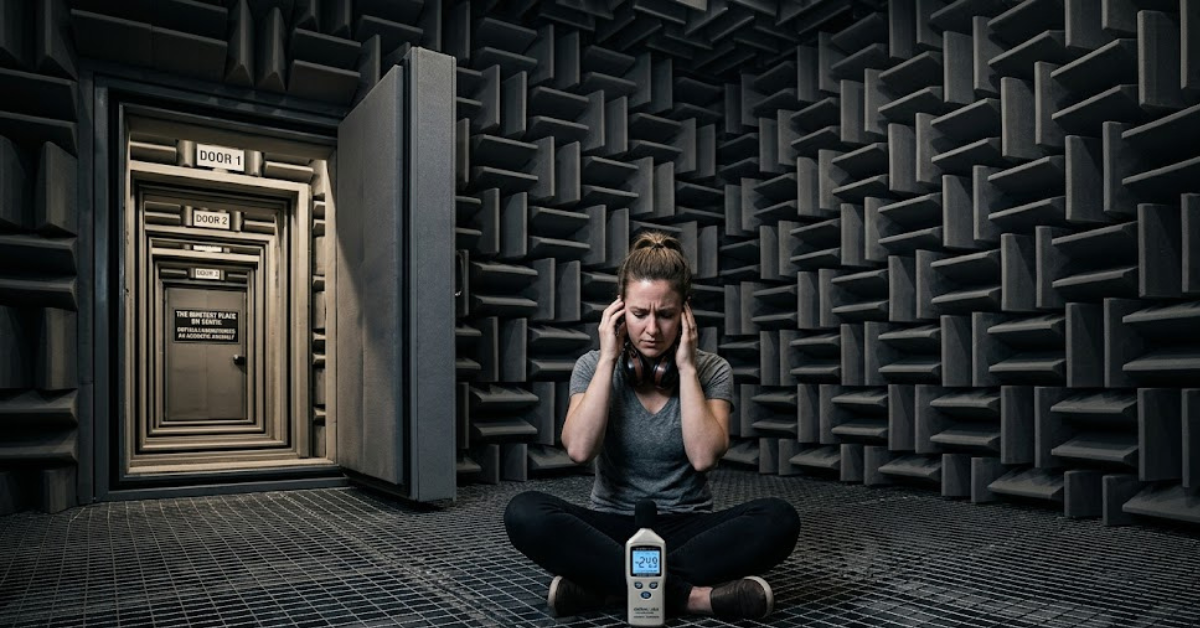
An anechoic chamber is a specially engineered room designed to eliminate echoes and outside sound. The walls, ceiling, and floor are covered with sound-absorbing wedges that trap noise instead of reflecting it.
The chamber reached an astonishing sound level of around -20.6 decibels. For comparison:
- Normal conversation: about 60 decibels
- A whisper: around 30 decibels
- Rustling leaves: roughly 20 decibels
Negative decibels are almost impossible to experience naturally, which makes this chamber unique.
Why Is the Room So Quiet?
Creating near-total silence is incredibly difficult. Even the smallest vibration can produce sound. Engineers used several techniques to isolate the chamber from noise.
Soundproof Construction
The room is built inside multiple layers of concrete and steel. These layers prevent traffic, weather, and building vibrations from entering.
Sound-Absorbing Foam
The wedge-shaped foam panels absorb sound waves before they can bounce around the room. This removes echoes completely.
Floating Floor Design
The chamber sits on vibration-dampening springs. Even footsteps and nearby machinery are minimized.
Together, these features create a level of silence that most people have never experienced before.
What Happens Inside Extreme Silence?
People often assume absolute quiet would feel relaxing. Surprisingly, many visitors find the experience unsettling.
In everyday life, our brains constantly process background noise. When that noise disappears completely, the body becomes hyper-aware of internal sounds.
Inside the chamber, people commonly hear:
- Their heartbeat
- Blood flowing through veins
- Stomach movements
- Breathing patterns
- Joint movements
Some people report dizziness or mild anxiety after only a few minutes. Without external sound cues, the brain can also struggle with balance and orientation.
How Long Can Someone Stay There?
Very few people can remain inside the chamber for extended periods. According to reports, many visitors begin to feel uncomfortable within 10 to 20 minutes.
The silence becomes mentally overwhelming because humans are not used to complete auditory isolation. Some individuals even experience temporary auditory hallucinations as the brain searches for sound stimulation.
Are There Quiet Places in Nature?
Although the anechoic chamber holds the record, nature also offers incredibly silent environments.
Antarctica
Parts of Antarctica are among the quietest natural places on Earth. With minimal wildlife, almost no traffic, and vast frozen landscapes, sound barely travels across the icy terrain.
Remote Deserts
Large deserts such as the Sahara can become eerily silent during calm weather conditions. The lack of vegetation and human activity reduces ambient noise significantly.
Deep Forests
Dense forests covered in snow can absorb sound naturally, creating peaceful and muted surroundings.
Still, even these locations contain natural noises like wind, shifting ice, or distant animal sounds. True near-total silence only exists in engineered environments.
Why Scientists Study Silence
Researchers use ultra-quiet chambers for much more than world records. These rooms help scientists test products and study human perception.
Common uses include:
- Testing microphones and audio equipment
- Researching hearing and sensory processing
- Studying the psychological effects of silence
- Improving acoustic engineering
- Developing quieter technology
Companies often rely on these chambers to evaluate how products sound in controlled conditions.
Can Silence Affect Mental Health?
Silence has both positive and negative effects depending on the environment and duration.
Benefits of Quiet Environments
Moderate quiet can:
- Reduce stress
- Improve focus
- Enhance creativity
- Support better sleep
- Lower mental fatigue
Effects of Extreme Silence
Too much silence may lead to:
- Disorientation
- Anxiety
- Heightened self-awareness
- Sensory discomfort
The human brain evolved in environments filled with natural sounds, so complete silence can feel unnatural.
The Science Behind Decibels
To understand the quietest place on Earth, it helps to understand how sound is measured.
Sound intensity is measured in decibels (dB). The scale is logarithmic, meaning each increase of 10 decibels represents a major jump in sound intensity.
Here are some examples:
- Jet engine: 140 dB
- Busy street: 80 dB
- Quiet library: 40 dB
- Human breathing: 10 dB
- Anechoic chamber: below 0 dB
Negative decibel levels don’t mean sound disappears entirely. They simply indicate sound levels below the average threshold of human hearing.
Why People Are Fascinated by Silence
Silence remains mysterious because modern life is filled with constant noise. Phones buzz, traffic hums, and conversations never fully stop.
The idea of experiencing total silence sparks curiosity because it feels almost impossible in everyday life. For some people, it represents peace. For others, it reveals how dependent humans are on sensory input.
That contrast is what makes the search for the quietest place so intriguing.
FAQs
What is the quietest place on earth?
The quietest place on Earth is the anechoic chamber at Microsoft’s headquarters in Redmond, Washington, which holds the record for the lowest background noise ever measured.
Can you hear your body in complete silence?
Yes. In extremely quiet environments, people can hear internal sounds like breathing, heartbeat, and stomach movements more clearly.
Is complete silence dangerous?
Short periods are generally safe, but prolonged exposure to total silence can feel mentally uncomfortable and disorienting.
Why do anechoic chambers feel strange?
Without echoes or ambient sound, the brain loses normal spatial audio cues, which can affect balance and perception.
Are there naturally silent places on Earth?
Some remote areas like Antarctica and isolated deserts are extremely quiet, but they still contain natural environmental sounds.
Conclusion
The answer to “what is the quietest place on earth?” leads to a fascinating mix of science, psychology, and human perception. While the world’s quietest chamber was built for research and engineering, it also reveals something deeper about how humans experience sound.
Complete silence may sound calming in theory, but in practice, it can feel surprisingly intense. The absence of noise changes the way the brain works, making us aware of sounds we usually ignore.
Whether you’re interested in acoustic science, sensory experiences, or unusual world records, the quietest place on Earth offers a remarkable glimpse into the hidden relationship between humans and sound.