
The ground beneath us may seem solid and unshakable, but the Earth is constantly moving. If you’ve ever wondered what causes earthquakes, you’re not alone. Millions of people search for answers after feeling tremors or hearing about major seismic disasters around the world.
Earthquakes happen when energy stored inside the Earth suddenly releases, causing the ground to shake. While some are tiny and barely noticeable, others can destroy buildings, trigger tsunamis, and reshape landscapes. Understanding how and why earthquakes occur can help explain everything from volcanic eruptions to seismic activity in places like California and Japan.
In this guide, we’ll break down the science behind earthquakes in a simple, easy-to-understand way while exploring where they happen, what causes them, and why some regions experience them more often than others.
What Causes Earthquakes?
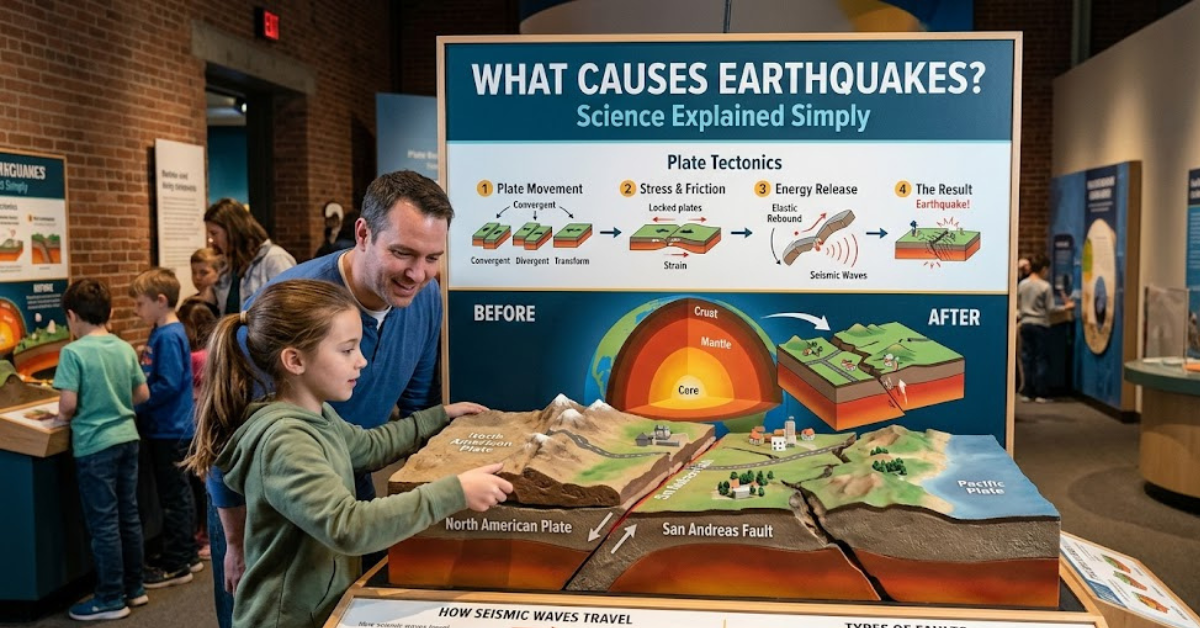
At the most basic level, earthquakes occur because the Earth’s crust is broken into huge pieces called tectonic plates. These plates are constantly moving, although very slowly.
When the plates grind against each other, pressure builds over time. Eventually, the stress becomes too great, and the rocks suddenly break or slip along faults in the Earth’s crust. That sudden release of energy creates seismic waves, which cause the shaking we feel during an earthquake.
This process explains what causes earthquakes tectonic plates are directly responsible for most seismic activity around the globe.
How Tectonic Plates Create Earthquakes
The Earth’s outer shell is divided into several massive tectonic plates. These plates float on a semi-molten layer beneath them and move a few centimeters every year.
There are three main types of plate boundaries where earthquakes commonly happen.
Transform Boundaries
At transform boundaries, plates slide past one another horizontally. Friction causes the plates to stick temporarily, building stress until they suddenly slip.
This is what causes earthquakes at transform boundaries, including many earthquakes in California along the famous San Andreas Fault.
Convergent Boundaries
Convergent boundaries form where plates collide. One plate may slide beneath another in a process called subduction.
These collisions can create extremely powerful earthquakes and volcanic eruptions. Many of the world’s largest earthquakes occur in these regions.
Divergent Boundaries
At divergent boundaries, plates move apart. Magma rises from below the Earth’s surface and forms new crust.
Although these earthquakes are usually smaller, they still contribute to global seismic activity.
What Causes Earthquakes and Volcanoes?
Earthquakes and volcanoes are closely connected because both are driven by tectonic plate movement.
When tectonic plates shift, magma beneath the Earth can rise toward the surface. Pressure changes underground may trigger volcanic eruptions and earthquakes at the same time.
This explains what causes earthquakes and volcanoes in regions such as:
- Japan
- Indonesia
- Chile
- Alaska
- The Pacific Ring of Fire
In volcanic areas, earthquakes sometimes happen because magma is moving underground before an eruption.
What Causes Earthquakes and Volcanic Eruptions?
The same geological forces responsible for earthquakes can also lead to volcanic eruptions. As tectonic plates move, they create cracks and pressure zones deep beneath the Earth’s surface.
Here’s how the process works:
- Tectonic plates shift and create stress
- Magma rises through weak areas in the crust
- Pressure builds underground
- Rocks fracture and release energy
- An earthquake or eruption occurs
Scientists carefully monitor earthquake activity near volcanoes because small tremors can sometimes signal an upcoming eruption.
What Causes Earthquakes and Tsunamis?
Some earthquakes happen under the ocean floor. When the seafloor suddenly moves upward or downward, it displaces massive amounts of water.
This movement creates giant ocean waves called tsunamis.
The most dangerous tsunamis usually come from large underwater earthquakes at subduction zones. These waves can travel across entire oceans at incredible speeds before crashing into coastal areas.
What Causes Earthquakes and Where Do They Happen?
Earthquakes can happen almost anywhere, but they are most common near tectonic plate boundaries.
The areas with the highest earthquake activity include:
- The Pacific Ring of Fire
- California
- Japan
- Indonesia
- Turkey
- Chile
- Mexico
This explains what causes earthquakes and where do they happen most frequently around the world.
Some regions experience earthquakes even though they are far from plate boundaries. These are called intraplate earthquakes and may result from ancient fault lines or underground stress.
What Causes Earthquakes in California?
California experiences frequent earthquakes because it sits near the boundary between the Pacific Plate and the North American Plate.
The San Andreas Fault is one of the most famous transform faults in the world. The plates on either side slowly slide past each other, creating enormous stress over time.
When that stress releases suddenly, earthquakes occur.
Smaller faults throughout California also contribute to the state’s high seismic activity.
What Causes Earthquakes in Japan Every Year?
Japan experiences thousands of earthquakes every year because it sits where several tectonic plates meet.
The country lies within the Pacific Ring of Fire, one of the most geologically active regions on Earth.
Several factors make Japan especially vulnerable:
- Multiple tectonic plates collide there
- Subduction zones surround the islands
- Frequent volcanic activity increases instability
This explains what causes earthquakes in Japan every year and why Japanese engineers design buildings to withstand constant seismic activity.
What Causes Earthquakes in Louisiana?
Louisiana is not near a major tectonic plate boundary, so earthquakes there are relatively rare. However, small earthquakes can still occur.
Possible causes include:
- Ancient underground fault lines
- Natural crust movement
- Human activities such as oil extraction or wastewater injection
These earthquakes are usually much weaker than those seen in California or Japan.
What Causes Earthquakes in Ohio?
Ohio occasionally experiences minor earthquakes due to ancient fault systems buried beneath the state.
In some cases, researchers believe human activities may contribute to seismic events. Wastewater disposal from drilling operations has been linked to increased earthquake activity in certain regions.
Most earthquakes in Ohio are small and cause little damage.
Explain What Causes Earthquakes for Kids
If you want to explain what causes earthquakes for kids, think of the Earth’s crust like a giant cracked eggshell.
The cracked pieces slowly move around. Sometimes they get stuck, and pressure builds up. When they suddenly break free, the ground shakes.
That shaking is an earthquake.
A simple way to picture it is rubbing your hands together until they suddenly slip. The sudden movement is similar to how tectonic plates release energy underground.
Signs an Earthquake May Happen
Scientists cannot predict earthquakes exactly, but they monitor warning signs such as:
- Small tremors called foreshocks
- Ground deformation
- Changes in underground water
- Increased volcanic activity
Modern technology helps researchers detect seismic activity and improve early warning systems.
How Earthquakes Are Measured
Earthquakes are measured using instruments called seismographs.
Scientists often use:
- Magnitude scales to measure energy released
- Intensity scales to measure damage and shaking
Larger earthquakes release exponentially more energy than smaller ones.
Effects of Major Earthquakes
Powerful earthquakes can cause devastating damage, including:
- Building collapse
- Landslides
- Tsunamis
- Fires
- Road and bridge destruction
However, earthquake-resistant construction and emergency planning can reduce the risks significantly.
How to Stay Safe During an Earthquake
If an earthquake happens, safety experts recommend:
- Drop to the ground
- Cover your head and neck
- Hold onto sturdy furniture
- Stay away from windows
- Move to open spaces if outdoors
Preparedness can save lives during major seismic events.
FAQs
What causes earthquakes to occur?
Earthquakes occur when stress builds up between tectonic plates and suddenly releases along faults in the Earth’s crust.
What causes earthquakes to happen suddenly?
Rocks underground can withstand stress only up to a point. Once pressure becomes too great, the rocks slip suddenly, releasing energy instantly.
What causes earthquakes and volcanic eruptions together?
Both are caused by tectonic plate movement and underground pressure changes involving magma and shifting crust.
Why does California have so many earthquakes?
California sits along a major fault system where tectonic plates slide past one another constantly.
Why is Japan prone to earthquakes?
Japan lies at the meeting point of several tectonic plates within the Pacific Ring of Fire, making it one of the world’s most active seismic zones.
Can humans cause earthquakes?
Yes, some human activities such as mining, reservoir construction, and wastewater injection can trigger smaller earthquakes.
Where do most earthquakes happen?
Most earthquakes happen near tectonic plate boundaries, especially around the Pacific Ring of Fire.
Conclusion
Understanding what causes earthquakes helps us make sense of one of nature’s most powerful forces. From shifting tectonic plates to volcanic eruptions and tsunamis, earthquakes are deeply connected to the constant movement beneath the Earth’s surface.
While scientists still cannot predict exactly when earthquakes will happen, modern research has greatly improved our understanding of why they occur and where they are most likely to strike. Whether you’re curious about earthquakes in California, Japan, or even places like Ohio and Louisiana, the underlying cause almost always comes back to geological stress and plate movement.
If you enjoyed learning about earthquakes, consider exploring related topics like volcanoes, tsunamis, and the science of tectonic plates to better understand how our planet works.