
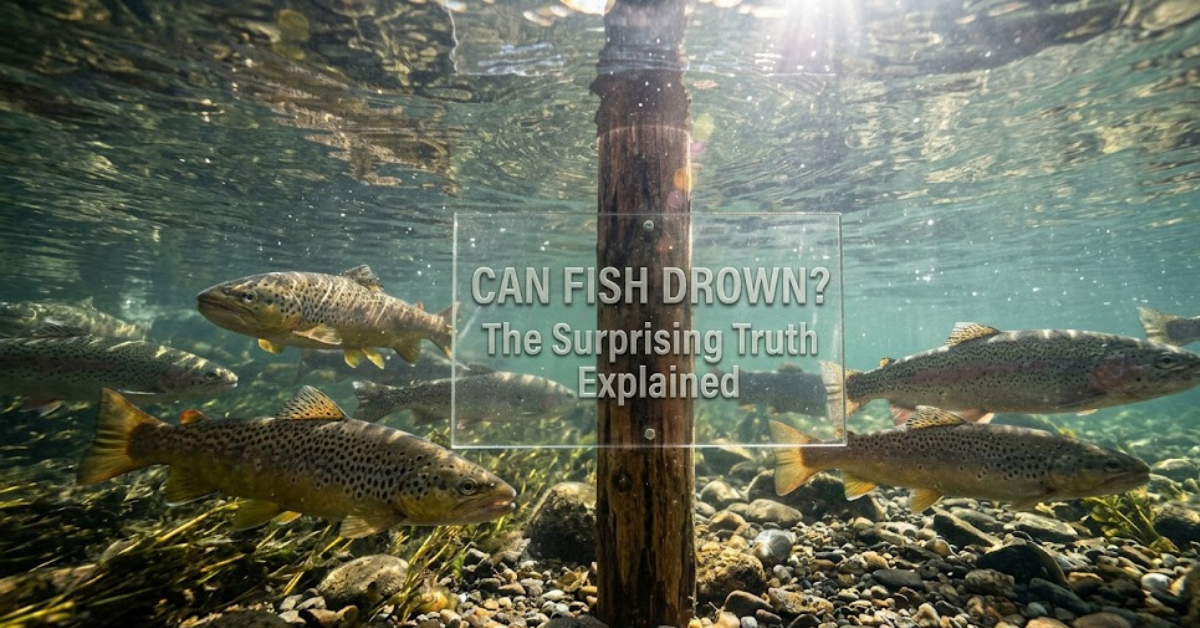

Most people assume fish are perfectly safe underwater. After all, water is their natural habitat. But the question “can fish drown?” is more complicated than it sounds. Surprisingly, fish can suffocate under certain conditions, even while surrounded by water.
Understanding how fish breathe helps explain why this happens. Different species rely on dissolved oxygen in water, and when oxygen levels drop too low, serious problems begin. From overcrowded tanks to polluted oceans, several situations can interfere with a fish’s ability to survive.
In this article, we’ll explore how fish respiration works, whether fish can drown in water, and some of the strange myths people search online, including whether fish can drown in milk or frozen water.
How Do Fish Breathe Underwater?
Fish do not breathe the same way humans do. Instead of lungs, most fish use gills to extract dissolved oxygen from water.
Here’s how the process works:
- Water enters through the fish’s mouth.
- The water passes over the gills.
- Tiny blood vessels absorb oxygen.
- Carbon dioxide is released back into the water.
As long as enough oxygen is available, fish can survive comfortably underwater. However, if oxygen levels fall too low, fish begin to suffocate.
That’s why the answer to “can fish drown in water” is technically yes, although scientists usually describe it as suffocation rather than drowning.
Can Fish Drown in Water?
Yes, fish can die from a lack of oxygen in water. While humans drown because our lungs fill with water, fish experience oxygen deprivation when water cannot provide enough dissolved oxygen.
This can happen in several situations:
- Dirty or polluted water
- Overcrowded aquariums
- Algae blooms consuming oxygen
- Extremely warm temperatures
- Poor water circulation
When oxygen levels crash, fish struggle to breathe and may gasp near the surface.
So when people ask “how can fish drown in water,” the real explanation is that the water itself no longer contains enough usable oxygen.
Can Fish Drown Underwater?
It sounds strange, but yes, fish can effectively drown underwater if their gills stop functioning properly.
Certain fish species, such as sharks and tuna, rely on constant movement to force water across their gills. If they stop swimming for too long, oxygen flow decreases dramatically.
This condition is sometimes called “ram ventilation.” Without movement, these fish can suffocate even in open water.
Can Fish Drown Out of Water?
Fish outside water do not technically drown. Instead, they suffocate because their gills collapse and dry out.
Gills are designed to function in water. Once exposed to air for too long:
- Oxygen exchange becomes ineffective
- Gill tissues stick together
- Moisture disappears rapidly
Some species can survive temporarily on land. Lungfish, mudskippers, and certain catfish have adapted to low-oxygen environments and can breathe air for short periods.
Still, most fish cannot survive long outside water.
Can Fish Drown in a Tank?
Aquarium fish can absolutely die from oxygen deprivation if tank conditions are poor.
Common causes include:
Overcrowding
Too many fish consume oxygen faster than it can be replaced.
Lack of Filtration
Filters help circulate water and improve oxygen exchange.
High Water Temperatures
Warm water holds less oxygen than cooler water.
Excess Waste
Decaying food and waste encourage bacteria growth, which uses oxygen.
Signs of oxygen stress in fish include:
- Gasping at the surface
- Lethargy
- Rapid gill movement
- Loss of appetite
Proper tank maintenance greatly reduces these risks.
Can Fish Drown in the Ocean?
Even oceans can become dangerous for fish when oxygen levels decline.
Scientists refer to low-oxygen ocean regions as “dead zones.” These areas often develop because of pollution, fertilizer runoff, and climate change.
When oxygen disappears, marine life either flees or dies.
Some major causes include:
- Agricultural runoff
- Rising ocean temperatures
- Oil spills
- Excess algae growth
So although oceans are vast, fish can still suffocate when environmental conditions deteriorate.
Can Fish Drown in Saltwater?
Saltwater fish are adapted specifically for marine environments. Freshwater fish placed in saltwater often die because their bodies cannot regulate salt balance properly.
However, this is not drowning in the traditional sense. It’s usually a fatal osmotic imbalance that damages organs and cells.
Likewise, saltwater fish struggle in freshwater for similar reasons.
Can Fish Drown in Frozen Water?
Fish can survive beneath ice if enough oxygen remains in the water. Lakes and ponds often freeze at the surface while deeper water stays liquid.
Problems occur when:
- Ice completely seals the surface
- Oxygen exchange stops
- Plants decay beneath the ice
In severe winters, oxygen levels can drop so low that fish die. This phenomenon is called “winterkill.”
Can Fish Drown in Air?
This question sounds backward, but it highlights a common misunderstanding. Fish do not process oxygen from air the way humans do.
Without water supporting their gills, most fish suffocate rapidly. While some species tolerate air briefly, prolonged exposure is deadly.
Can Fish Drown in Milk or Chocolate Milk?
This internet question comes up surprisingly often. The answer is yes, fish would quickly die in milk or chocolate milk.
Milk lacks the dissolved oxygen fish need. It also contains fats, sugars, and proteins that clog gill structures and disrupt normal respiration.
Chocolate milk would be even worse because of added ingredients and reduced oxygen availability.
These liquids are completely unsuitable for aquatic life.
Can Fish Drown If They Swim Backwards?
No, swimming backward does not make fish drown.
This myth likely comes from confusion about species that need forward motion for breathing. Certain sharks rely on forward swimming to push water over their gills, but swimming backward itself is not the problem.
The issue is whether enough water flows across the gills.
Can Fish Drown If You Pull Them Backwards?
Forcing some fish backward through water can interfere with normal gill flow. In species that depend heavily on forward movement, backward motion may reduce oxygen intake.
However, this is not a common natural situation.
Can Fish Drown Themselves?
Fish do not intentionally drown themselves. They lack the psychological understanding required for deliberate self-destruction.
However, stress, disease, injury, or poor environmental conditions can cause behaviors that reduce survival chances.
What Causes Low Oxygen in Water?
Several environmental factors reduce oxygen availability:
- Pollution
- Excess algae growth
- Warm temperatures
- Overfeeding in tanks
- Stagnant water
- Decomposition of organic matter
Healthy aquatic ecosystems depend heavily on balanced oxygen levels.
Signs a Fish Is Struggling to Breathe
Fish experiencing oxygen deprivation often display visible symptoms.
Watch for:
- Surface gasping
- Erratic swimming
- Staying near filters or bubbles
- Weak movement
- Rapid gill motion
These signs usually indicate poor water quality or low oxygen levels.
How to Prevent Fish From Suffocating
Whether in aquariums or ponds, maintaining oxygen is essential.
Helpful tips include:
- Use proper filtration systems
- Avoid overcrowding
- Perform regular water changes
- Monitor temperature
- Remove waste promptly
- Add aeration devices when needed
Healthy water conditions dramatically improve fish survival.
FAQs
Can fish drown like humans?
Not exactly. Humans drown when water fills the lungs. Fish usually die from insufficient oxygen in water.
Can fish survive without oxygen?
No. Fish require oxygen to survive, even though they obtain it differently from humans.
Why do fish gasp at the surface?
This usually signals low oxygen levels in the water.
Can sharks drown?
Some shark species can suffocate if they stop swimming because they rely on constant water flow across their gills.
Can aquarium fish drown overnight?
Yes, especially if oxygen levels suddenly drop due to overcrowding, equipment failure, or poor water quality.
Do fish sleep?
Yes, most fish rest in a reduced-activity state, though they do not sleep exactly like humans.
Conclusion
So, can fish drown? In a way, yes. Fish can suffocate when oxygen levels become dangerously low or when their gills cannot function properly. While the process differs from human drowning, the result is the same: the animal can no longer breathe effectively.
From poorly maintained tanks to oxygen-starved oceans, many environmental factors can threaten aquatic life. Understanding how fish breathe helps explain why clean, oxygen-rich water is essential for their survival.
The next time someone asks whether fish can drown underwater, you’ll know the answer is more fascinating than it first appears.