
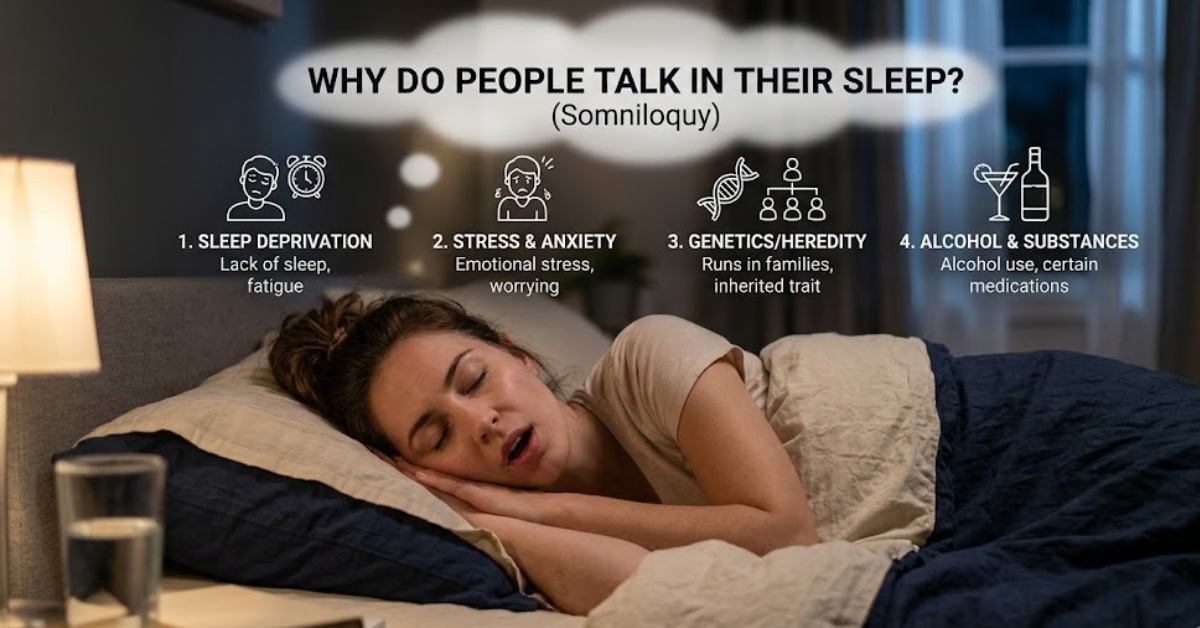

Have you ever heard someone mumbling, laughing, or carrying on a full conversation while fast asleep? Sleep talking can be funny, confusing, and sometimes even a little unsettling. Many people wonder, “why do people talk in their sleep?” especially when it happens regularly or involves emotional conversations.
Sleep talking, medically known as somniloquy, is a common sleep behavior that affects both children and adults. In most cases, it’s harmless and temporary. However, frequent nighttime talking can sometimes point to stress, poor sleep habits, or an underlying sleep disorder. Understanding why it happens can help you sleep better and know when it’s time to seek professional advice.
What Is Sleep Talking?
Sleep talking is a type of parasomnia, which refers to unusual behaviors that occur during sleep. A person may speak clearly, mumble incoherently, whisper, shout, or even respond to imagined conversations while remaining asleep.
What makes sleep talking unusual is that people rarely remember doing it the next morning. Episodes can last just a few seconds or continue for several minutes.
Sleep talking may happen during:
- Light sleep
- Deep sleep
- REM sleep (dream stage)
The speech can range from random sounds to complete sentences. Sometimes it’s calm and harmless, while other times it may sound emotional or intense.
Why Do People Talk in Their Sleep at Night?
There isn’t one single explanation for sleep talking. Researchers believe it’s connected to partial awakenings during sleep cycles. During these moments, the brain becomes active enough to produce speech, but not awake enough for conscious awareness.
Several factors can increase the likelihood of sleep talking at night.
Stress and Anxiety
Mental stress is one of the most common triggers. People who are overwhelmed, anxious, or emotionally exhausted may experience disrupted sleep patterns, which can lead to nighttime talking.
Stress-related sleep talking often becomes more noticeable during:
- Exams or work pressure
- Relationship issues
- Major life changes
- Emotional trauma
Sleep Deprivation
Not getting enough sleep can confuse the brain’s normal sleep cycles. When your body struggles to recover from exhaustion, unusual sleep behaviors become more common.
People who stay up late regularly or have inconsistent sleep schedules are more likely to experience episodes.
Fever and Illness
High fevers can temporarily affect brain activity during sleep. This is especially common in children, who may talk, cry, or mumble while sick.
Genetics
Sleep talking often runs in families. If your parents or siblings talk in their sleep, you may be more likely to experience it too.
Certain Sleep Disorders
Sometimes sleep talking appears alongside other sleep-related conditions, including:
- Sleepwalking
- Night terrors
- REM sleep behavior disorder
- Sleep apnea
In these cases, the nighttime talking may be more intense or frequent.
Why Do People Talk in Their Sleep Every Night?
Occasional sleep talking is extremely common. Frequent sleep talking every night, however, may signal an underlying issue that deserves attention.
People who talk in their sleep a lot often experience one or more of the following:
- Chronic stress
- Poor sleep quality
- Irregular sleep schedules
- Sleep disorders
- Alcohol or medication effects
If the behavior suddenly becomes frequent, loud, or aggressive, it’s worth monitoring your overall sleep health.
Can Lifestyle Habits Make It Worse?
Yes. Several daily habits can increase nighttime sleep disturbances, including:
- Excess caffeine late in the day
- Alcohol consumption before bed
- Heavy screen use at night
- Lack of physical activity
- Sleeping too little
Improving sleep hygiene can reduce episodes for many people.
Why Do People Talk in Their Sleep Sometimes?
For many individuals, sleep talking only happens occasionally. A stressful week, emotional exhaustion, or disrupted sleep can trigger temporary episodes.
This explains why some people may only talk during sleep once every few months or during periods of high stress. Occasional episodes are usually not considered dangerous or abnormal.
Children also tend to outgrow sleep talking as their nervous systems mature.
Common Symptoms of Sleep Talking
Sleep talking can look different from person to person. Some common signs include:
- Whispering during sleep
- Random words or phrases
- Laughing or crying while asleep
- Full conversations
- Emotional outbursts
- Nonsensical speech
The person usually remains asleep throughout the episode and may not respond logically if spoken to.
Is Sleep Talking Dangerous?
In most cases, sleep talking is harmless. It typically doesn’t affect physical health or brain function.
However, there are situations where it may indicate a deeper problem.
You should consider medical advice if sleep talking is accompanied by:
- Violent movements
- Intense fear or screaming
- Difficulty breathing during sleep
- Extreme daytime fatigue
- Sleepwalking episodes
- Sudden onset in adulthood
These symptoms may suggest a sleep disorder requiring evaluation.
Why Do Some People Talk in Their Sleep So Much?
Frequent sleep talking often reflects ongoing sleep disruption. The brain may struggle to maintain stable sleep stages, causing repeated partial awakenings.
People who talk in their sleep so much may also have:
- Chronic insomnia
- Anxiety disorders
- High stress levels
- Irregular work schedules
- Poor sleep environments
Keeping a sleep diary can help identify patterns and triggers.
How to Reduce Sleep Talking
There’s no guaranteed cure, but several habits can help reduce episodes naturally.
Improve Sleep Hygiene
Healthy sleep routines can significantly improve nighttime brain activity.
Try these tips:
- Go to bed at the same time daily
- Avoid caffeine before bedtime
- Limit screen exposure at night
- Keep your bedroom cool and quiet
- Aim for 7–9 hours of sleep
Manage Stress
Relaxation techniques can calm the nervous system before sleep.
Helpful options include:
- Meditation
- Deep breathing
- Journaling
- Light stretching
- Reading before bed
Avoid Alcohol Before Sleep
Alcohol may initially make you sleepy, but it often disrupts deeper sleep stages later in the night.
Seek Medical Advice if Needed
If sleep talking becomes severe, frequent, or disruptive, a sleep specialist may recommend a sleep study to rule out other conditions.
Sleep Talking in Children
Children are more likely to talk in their sleep than adults. This is usually normal and often linked to brain development.
Common triggers in children include:
- Fatigue
- Fever
- Emotional excitement
- Irregular sleep schedules
Most children outgrow sleep talking naturally over time.
What Does Science Say About Sleep Talking?
Sleep researchers continue studying the relationship between brain activity and parasomnias. Current evidence suggests sleep talking occurs when areas of the brain responsible for speech briefly activate during sleep transitions.
Interestingly, people can talk during both REM and non-REM sleep, though the speech patterns may differ. REM-related speech is often linked to dreams, while non-REM sleep talking may sound more random or fragmented.
Online discussions like “why do people talk in their sleep reddit” often include personal experiences, but medical experts recommend focusing on scientific sleep research rather than anecdotal stories.
Some wellness platforms, including searches related to “why do people talk in their sleep bellabeat” and “bellabeat.com why do people talk in their sleep,” also discuss the connection between stress, sleep quality, and nighttime behaviors.
FAQs
Why do people talk in their sleep?
People talk in their sleep because of temporary brain activity during sleep cycles. Stress, sleep deprivation, genetics, and sleep disorders can all contribute.
Is sleep talking a mental illness?
No, sleep talking itself is not considered a mental illness. It’s usually a harmless sleep behavior.
Can stress cause sleep talking?
Yes. Stress and anxiety are among the most common causes of nighttime talking.
Why do people suddenly start talking in their sleep?
Sudden sleep talking may be linked to stress, illness, medication changes, or poor sleep quality.
Is sleep talking common?
Yes. Occasional sleep talking is very common, especially in children and young adults.
Should I wake someone who is talking in their sleep?
Usually not. Most episodes are harmless, and waking the person may confuse or disturb them unnecessarily.
Can sleep talking reveal secrets?
Not really. Most sleep talking is random and nonsensical rather than truthful or meaningful.
Conclusion
If you’ve been wondering why do people talk in their sleep, the answer usually comes down to how the brain behaves during different sleep stages. Stress, exhaustion, genetics, and disrupted sleep patterns can all play a role in this surprisingly common behavior.
For most people, sleep talking is harmless and occasional. Still, frequent or intense episodes may point to poor sleep quality or an underlying sleep disorder worth investigating. Improving your sleep habits, reducing stress, and maintaining a consistent bedtime routine can often make a noticeable difference.
Understanding your sleep patterns is an important step toward better overall health. If nighttime behaviors continue to disrupt your rest, speaking with a healthcare professional can help uncover the root cause and improve your sleep quality long term.