

Few things ruin a drive faster than hearing the flap-flap sound of a flat tire. Whether you’re on the roadside, in your driveway, or heading to work, knowing how to change a tire can save time, money, and stress. It’s one of the most practical car skills every driver should learn.
The good news? You don’t need to be a mechanic. With the right tools and a calm approach, most people can replace a flat tire in under 30 minutes. This guide walks you through the process clearly, safely, and confidently.
Why Learning to Change a Tire Matters
Flat tires happen unexpectedly. Nails, potholes, worn tread, and sidewall damage can leave you stranded without warning.
Knowing the steps on how to change a tire helps you:
- Stay safer on the road
- Avoid long waits for roadside assistance
- Save towing costs
- Build confidence as a driver
- Get back on the road faster
Tools You Need Before You Start
Most vehicles include basic tire-changing tools in the trunk or cargo area. Check yours before an emergency happens.
Essential Items:
- Spare tire (fully inflated)
- Car jack
- Lug wrench
- Vehicle owner’s manual
- Wheel wedges or bricks
- Flashlight
- Gloves
- Reflective triangle or hazard lights
If any of these are missing, replace them now—not after a flat happens.
Safety First: Before You Remove the Tire
Before learning how to change a tire on a car, safety comes first.
Move to a Secure Spot
If possible, drive slowly to:
- A flat shoulder
- Parking lot
- Side street
- Level ground away from traffic
Avoid changing a tire on curves, hills, or soft dirt.
Turn On Hazards
Use hazard lights immediately so other drivers can see you.
Apply Parking Brake
Always engage the parking brake before lifting the vehicle.
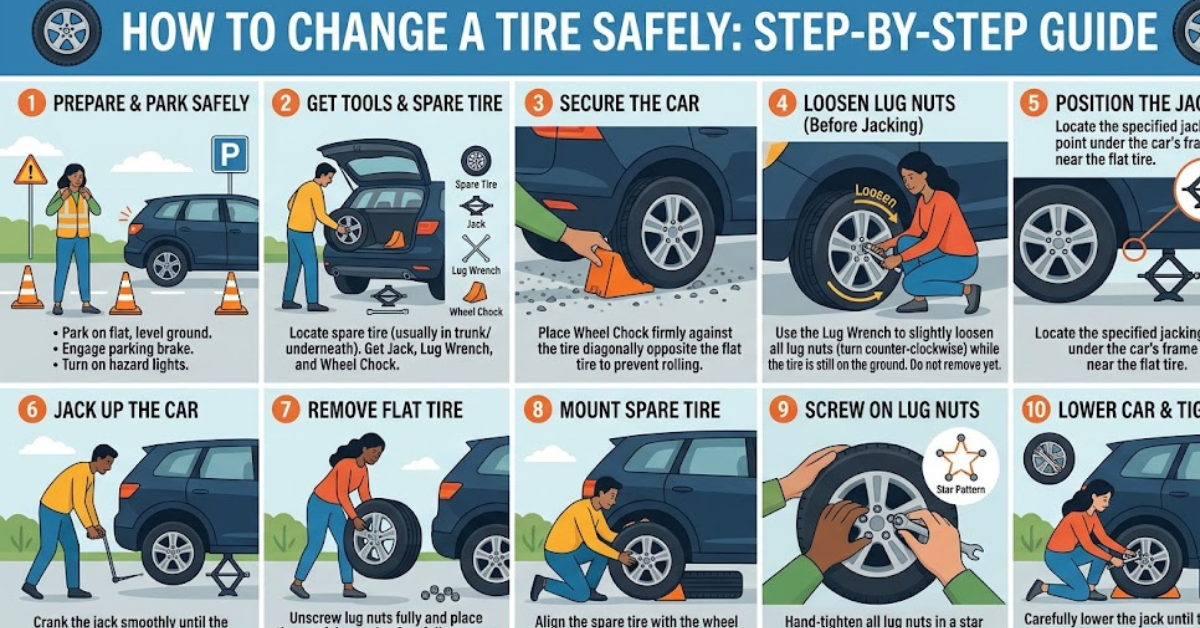
How to Change a Tire Step by Step
Follow these simple instructions carefully.
Step 1: Loosen the Lug Nuts
Use the lug wrench to turn each lug nut counterclockwise. Don’t remove them fully yet—just break the resistance.
Tip: Use body weight if they’re tight.
Step 2: Position the Jack Correctly
Locate the proper jack point under your vehicle. This information is in the owner’s manual.
Place the jack on firm, level ground.
Step 3: Raise the Vehicle
Pump or crank the jack until the flat tire lifts a few inches off the ground.
Make sure the car remains stable while lifting.
Step 4: Remove Lug Nuts and Tire
Now fully remove the loosened lug nuts and place them somewhere safe.
Grip the tire firmly and pull it straight toward you.
Step 5: Mount the Spare Tire
Line up the holes on the spare with the wheel bolts.
Push it onto the hub until it sits flush.
This is the core part of how to change a tire step by step and should be done carefully.
Step 6: Hand-Tighten Lug Nuts
Thread each lug nut by hand first.
Tighten in a star pattern rather than going around in a circle. This helps the wheel sit evenly.
Step 7: Lower the Car
Slowly lower the vehicle until the tire touches the ground fully.
Remove the jack.
Step 8: Fully Tighten Lug Nuts
Use the wrench to tighten all lug nuts securely in a star pattern.
Do not overtighten with excessive force.
Step 9: Check Tire Pressure
Many spare tires lose pressure over time.
Use a tire gauge if possible. Driving on an underinflated spare can be dangerous.
What to Do After Changing the Tire
Once the spare is installed:
- Drive slowly
- Avoid highways if using a temporary spare
- Visit a tire shop soon
- Repair or replace the damaged tire
- Recheck lug nut tightness after a few miles
How to Change a Tire Without a Jack
If you don’t have a jack, options are limited.
Best Solutions:
- Call roadside assistance
- Ask for help from a nearby service station
- Use a portable inflator if the tire only has a slow leak
- Use tire sealant for small punctures (temporary fix)
Attempting unsafe lifting methods can damage the car or cause injury.
How to Change a Tire on a Bike
Bike tires are simpler than car tires.
Basic Process:
- Release brakes if needed
- Remove wheel
- Use tire levers to remove one side of the tire
- Replace tube or patch puncture
- Reinstall tire
- Inflate to recommended PSI
How to Change a Tire on a Rim
Removing a tire from a rim usually requires tire irons, lubrication, and experience.
For most people, it’s safer to let a tire shop handle it using proper mounting machines. DIY attempts can damage rims or sensors.
Common Mistakes to Avoid
When learning instructions on how to change a tire, avoid these errors:
- Jacking the car on uneven ground
- Forgetting the parking brake
- Standing in traffic lanes
- Losing lug nuts
- Installing spare backward
- Driving too far on a donut spare
- Ignoring tire pressure afterward
Pro Tips for Easier Tire Changes
- Practice once at home before an emergency
- Keep tools clean and accessible
- Replace old spares every few years
- Carry a flashlight and gloves
- Learn your vehicle’s jack points now
FAQs
How long does it take to change a tire?
Most people can do it in 15 to 30 minutes once familiar with the process.
Can I drive on a spare tire?
Yes, but temporary spares are for short distances only. Check your manual for speed and mileage limits.
What if lug nuts won’t loosen?
Use more leverage carefully, stand on the wrench, or call roadside help if they’re seized.
Can I change a tire by hand?
You can hand-thread lug nuts, but tools are needed to loosen and tighten them properly.
Is it safe to change a tire on the highway shoulder?
Only if absolutely necessary. Move farther away from traffic if possible.
Do I need to replace TPMS sensors when changing tires?
Not always. Sensors are usually transferred or serviced during tire replacement.
Conclusion
Learning how to change a tire is a simple skill that pays off for life. With the right tools, a safe location, and a clear process, you can handle a flat tire calmly and confidently. Practice once at home so you’re ready when it matters most.
Want to be even more prepared? Build an emergency roadside kit and check your spare tire pressure today.