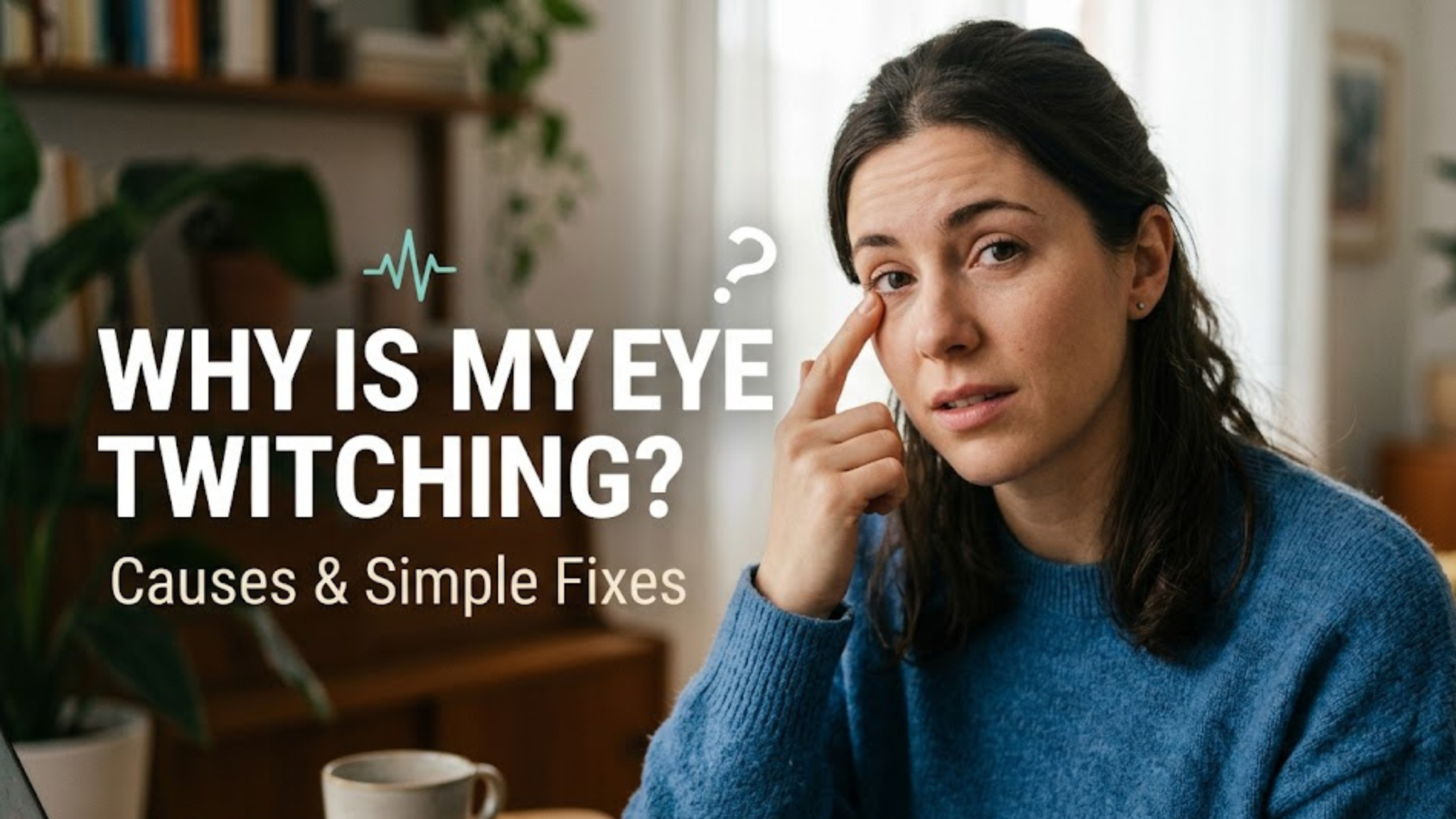

If you’ve ever caught your eyelid flickering out of nowhere, you’ve probably wondered what’s going on. That strange little spasm can feel annoying—and sometimes even a bit worrying—especially when it keeps coming back.
In most cases, eyelid twitching is harmless and temporary. It’s usually linked to everyday habits like stress, lack of sleep, screen strain, or too much caffeine. Once you understand the triggers, it becomes much easier to control and prevent.
Let’s break it down in a simple, clear way.
What Is Eye Twitching?
Eye twitching (also called eyelid spasms) happens when the tiny muscles around your eye contract on their own.
It most commonly affects the lower eyelid and may come and go without warning. While it can feel noticeable to you, others usually can’t see it happening.
In most situations, it’s mild and not a sign of anything serious.
Common Causes of Eyelid Twitching
There isn’t just one trigger—several everyday habits can contribute.
1. Stress and Mental Pressure
Stress is one of the biggest causes. When your nervous system is overloaded, small muscle spasms can appear in different parts of the body, including your eyelids.
2. Lack of Sleep
Not getting enough rest affects nerve function and muscle control, making twitching more likely.
3. Screen Overuse
Long hours on phones, laptops, or TVs strain your eyes and reduce blinking, which leads to irritation.
4. Caffeine and Stimulants
Too much coffee, tea, or energy drinks can overstimulate the nervous system.
5. Dry or Strained Eyes
Poor lighting, reading for long periods, or not resting your eyes can lead to dryness and muscle irritation.
Why It Starts Suddenly
Sometimes the twitch appears out of nowhere. This usually happens when your body reacts to a short-term trigger such as:
- A stressful situation
- A night of poor sleep
- Extra caffeine intake
- Extended screen time
In most cases, it fades within a few hours or a couple of days.
Why It Happens More Frequently
If the twitching feels frequent or ongoing, it’s often because multiple triggers are happening at once.
For example:
- Stress combined with fatigue
- High caffeine intake with long screen use
- Lack of sleep plus eye strain
When these stack up, the muscles around the eye become more sensitive.
Why It Can Last for Days or Weeks
Sometimes the twitch doesn’t go away quickly and may last longer than expected.
Common reasons include:
- Ongoing stress
- Chronic tiredness
- Continuous screen exposure
- Low nutrient levels (like magnesium)
Even though it feels persistent, it is usually still harmless and improves once triggers are reduced.
Eye Twitching During Pregnancy
During pregnancy, hormonal changes and fatigue can make the nervous system more sensitive.
This may be linked to:
- Hormonal fluctuations
- Sleep disruption
- Increased stress
- Dietary changes
In most cases, it’s not dangerous, but persistent symptoms should still be discussed with a healthcare provider.
When Twitching Feels Strong or Uncontrollable
Occasionally, eyelid spasms can feel more intense. This may happen due to:
- Severe fatigue
- High anxiety
- Eye irritation or infection
- Rare nerve-related conditions
If the twitch spreads to other parts of the face or becomes constant, it’s best to get medical advice.
How to Reduce or Stop It Naturally
Most cases improve with simple lifestyle changes:
- Get enough sleep (7–9 hours)
- Cut down caffeine
- Take regular screen breaks
- Use artificial tears if eyes feel dry
- Manage stress with relaxation techniques
- Stay hydrated
Small changes often make a big difference within days.
When You Should See a Doctor
Most eyelid twitching is harmless, but you should seek medical advice if you notice:
- Twitching lasting several weeks
- Drooping eyelid
- Vision changes
- Spasms spreading to other facial muscles
These symptoms are uncommon but should not be ignored.
FAQs
Why does eyelid twitching happen randomly?
It usually comes from temporary triggers like stress, fatigue, or screen strain.
Why does it happen every day?
Daily twitching often means your lifestyle habits (sleep, stress, caffeine) need adjustment.
Why does it last all day sometimes?
This usually happens when the eye muscles are overworked or irritated for long periods.
Conclusion
Eyelid twitching is usually your body’s way of signaling that something is off—often stress, tiredness, or overstimulation. In most cases, it isn’t serious and goes away on its own with better rest and healthier habits.
If it keeps coming back, focus on reducing strain, improving sleep, and managing stress. And if it persists for weeks or worsens, getting it checked is the safest step.