
Have you ever looked up at the night sky and wondered what would happen if the Moon suddenly vanished? It sounds like the plot of a science fiction movie, but scientists have actually studied the possibility. Understanding what happens if the moon disappeared reveals just how important Earth’s natural satellite really is.
The Moon does far more than light up the night sky. It controls ocean tides, stabilizes Earth’s tilt, influences wildlife behavior, and even affects the length of our days. If it disappeared tomorrow, life on Earth would change dramatically in ways most people never imagine.
In this article, we’ll explore the immediate effects, long-term consequences, and scientific theories surrounding a moonless Earth.
Why the Moon Matters More Than You Think
The Moon may look small in the sky, but its gravitational pull has a huge influence on Earth. It acts like a stabilizer, helping maintain the planet’s balance over millions of years.
Without it, several natural systems would begin to shift.
The Moon affects:
- Ocean tides
- Earth’s rotation speed
- Planetary stability
- Animal migration patterns
- Nighttime brightness
- Climate consistency
Scientists believe life on Earth evolved partly because of the Moon’s presence.
Immediate Effects if the Moon Vanished
If the Moon suddenly disappeared, people on Earth would notice some changes almost immediately.
Nights Would Become Much Darker
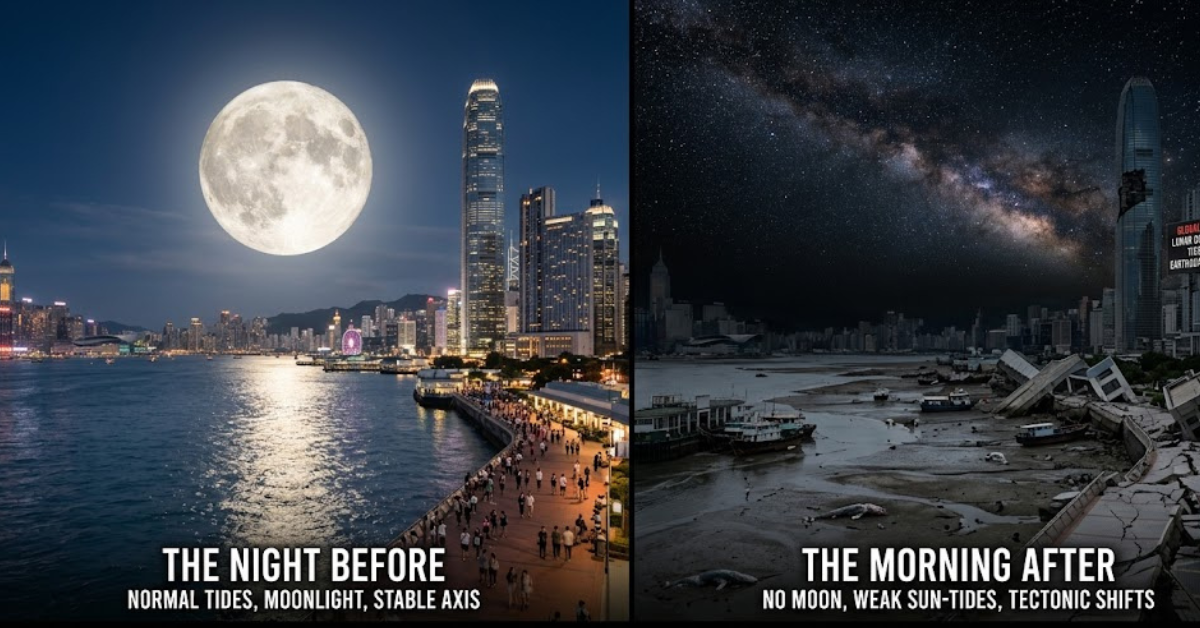
The full Moon reflects sunlight and provides natural illumination at night. Without it, nights would be significantly darker, especially in rural areas away from city lights.
Many nocturnal animals depend on moonlight for hunting, navigation, and survival. Sea turtles, birds, and insects would likely become disoriented.
Ocean Tides Would Shrink
One of the biggest changes would involve the oceans.
The Moon’s gravity is the primary reason Earth experiences strong tides. The Sun also contributes, but its effect is weaker because it’s much farther away.
Without the Moon:
- Tides would become about one-third of their current size
- Coastal ecosystems would be disrupted
- Marine life cycles could collapse in some regions
- Fishing industries might be affected
Tidal zones are home to countless species, so even a moderate change could create major ecological problems.
Earth’s Rotation Would Change
The Moon gradually slows Earth’s rotation through a process called tidal braking. Right now, Earth’s days are slowly getting longer over millions of years.
If the Moon disappeared:
- Earth would spin slightly faster over time
- Days would eventually become shorter
- Seasonal patterns could change
Billions of years ago, a single Earth day lasted only around six hours. The Moon helped slow the planet down to the 24-hour cycle we experience today.
Earth’s Axis Could Become Unstable
This is where things get truly serious.
The Moon stabilizes Earth’s axial tilt, which currently sits at about 23.5 degrees. That tilt is responsible for our seasons.
Without lunar stabilization, Earth’s tilt could begin to wobble unpredictably.
What Could Happen?
Over millions of years:
- Some regions might experience extreme climates
- Seasons could become severe or unpredictable
- Polar ice caps might expand or melt dramatically
- Weather systems could grow more chaotic
Scientists think Earth’s tilt could fluctuate anywhere between 0 and 85 degrees without the Moon’s influence.
That level of instability would dramatically reshape life on the planet.
Would Humans Survive?
In the short term, humans would survive. The disappearance of the Moon would not instantly destroy Earth.
However, civilization would face long-term challenges.
Potential Human Impacts
Some likely consequences include:
- Coastal flooding pattern changes
- Agricultural disruption
- Marine food shortages
- Navigation challenges for wildlife
- Climate instability over thousands of years
Modern technology could help humanity adapt, but ecosystems would struggle much more.
What Would Happen to Animals?
Many species rely on lunar cycles.
Animals use the Moon for:
- Navigation
- Breeding cycles
- Hunting patterns
- Migration timing
For example:
- Coral reefs spawn according to lunar phases
- Sea turtles use moonlight to find the ocean
- Certain predators hunt more effectively during full moons
Without lunar rhythms, many ecosystems could become unbalanced.
Would Earth Lose Gravity?
No. Earth’s gravity would remain almost exactly the same.
The Moon affects tides through gravitational interaction, but it does not provide Earth’s gravity itself. Humans would not float away if the Moon disappeared.
That’s a common misconception.
Could the Moon Actually Disappear?
Realistically, the Moon is not expected to suddenly vanish.
However, scientists have explored hypothetical scenarios involving:
- Massive collisions
- Orbital ejections
- Cosmic disturbances
None are considered likely anytime soon.
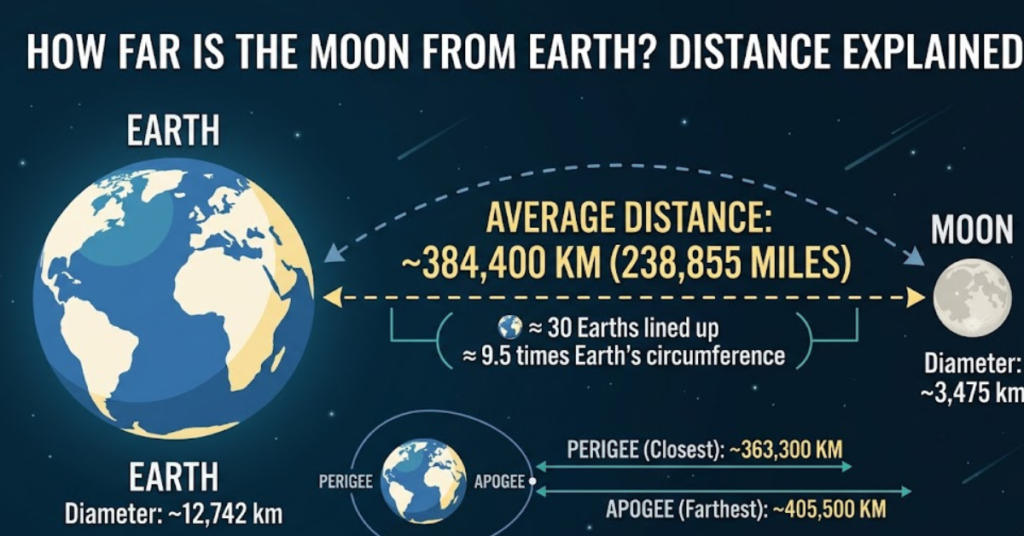
In fact, the Moon is slowly drifting away from Earth at a rate of about 3.8 centimeters per year.
How the Night Sky Would Look
The sky would feel very different without the Moon.
You would notice:
- Much darker nights
- More visible stars
- Stronger views of distant galaxies
- No lunar eclipses
- No moon phases
Ancient cultures used the Moon for calendars, navigation, and storytelling. Its disappearance would also remove a major cultural and historical symbol from human life.
The Psychological Effect of a Missing Moon
Humans have lived with the Moon for our entire existence. Its sudden absence would likely create emotional and psychological effects.
People might experience:
- Increased anxiety
- Disorientation
- Cultural fear
- Changes in nighttime behavior
The Moon has influenced mythology, religion, art, and literature for thousands of years. Losing it would feel deeply unnatural to many people.
Scientific Theories About a Moonless Earth
Scientists use computer simulations to understand what happens if the moon disappeared. Most models show that Earth would remain habitable for some time, but conditions would slowly become more unstable.
The biggest concern is axial instability.
Mars provides an example. Unlike Earth, Mars lacks a large stabilizing moon, which causes its tilt to vary dramatically over long periods.
That instability contributes to extreme climate shifts.
Fascinating Facts About the Moon’s Influence
Here are some surprising facts many people don’t know:
- The Moon helps stabilize Earth’s climate
- Lunar gravity slightly stretches Earth every day
- Some animals can detect lunar cycles even underwater
- Total solar eclipses are possible because of the Moon’s precise size and distance
- Earth’s tides would still exist without the Moon, but they would be much weaker
These details show how connected Earth and the Moon truly are.
FAQs
What happens if the moon disappeared suddenly?
Earth would experience weaker tides, darker nights, and long-term climate instability. Humans would survive initially, but ecosystems would face major disruption.
Would Earth stop spinning without the Moon?
No, Earth would continue spinning. However, its rotation rate could gradually change over time.
Could humans live without the Moon?
Yes, humans could survive, especially with modern technology. But long-term environmental changes would create serious challenges.
Would the oceans disappear without the Moon?
No, the oceans would remain. Only the strength of tides would decrease significantly.
Why does the Moon stabilize Earth?
Its gravitational pull helps keep Earth’s axial tilt relatively stable, preventing extreme climate swings.
Would animals be affected?
Yes. Many species depend on lunar cycles for migration, breeding, hunting, and navigation.
Conclusion
The idea of losing the Moon may sound fictional, but it highlights how interconnected our planet truly is. Exploring what happens if the moon disappeared shows that the Moon is much more than a glowing object in the night sky.
Without it, Earth would face weaker tides, darker nights, shifting climates, and ecological disruption. While humanity might survive, the natural balance of life on Earth would change dramatically over time.
The next time you see the Moon overhead, it’s worth remembering that its quiet presence plays a massive role in keeping our world stable.