
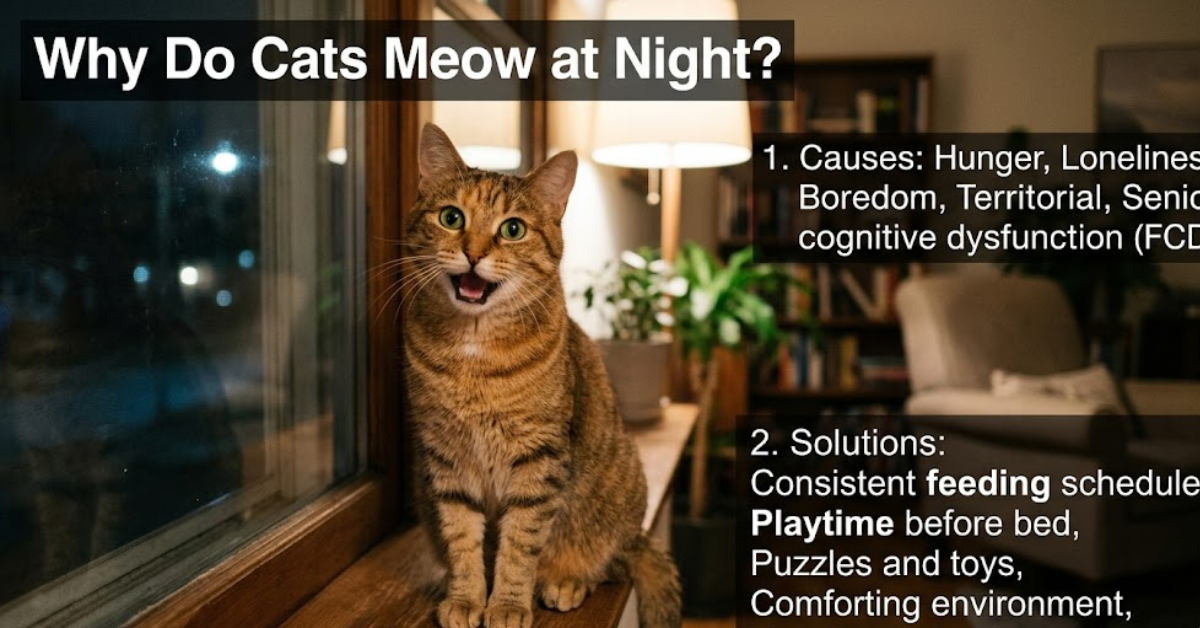

If you’ve ever been awakened by your cat’s loud meowing in the middle of the night, you’re not alone. Many cat owners find themselves wondering, why do cats meow at night when everything seems calm and quiet. While occasional nighttime vocalization is normal, persistent meowing can leave both cats and owners frustrated and sleep-deprived.
Understanding the reasons behind this behavior is the first step toward finding an effective solution. Cats meow for many different reasons, ranging from hunger and boredom to medical issues and natural instincts. In this guide, we’ll explore the most common explanations, how to identify the cause, and what you can do to help your feline friend settle down after dark.
Why Do Cats Meow at Night?
Cats are naturally more active during dawn and dusk, a behavior inherited from their wild ancestors. While most domestic cats adapt to their owner’s schedule, some continue to be highly active during nighttime hours.
If you’ve been asking why do cats meow at night for no reason, the truth is that there is almost always an underlying cause. The challenge is figuring out what your cat is trying to communicate.
Common Reasons Cats Meow at Night
Hunger or Seeking Food
One of the most common answers to why do cats meow at night time is hunger.
Cats often learn that meowing gets attention. If you’ve ever gotten out of bed to feed your cat after hearing them cry, they may have associated nighttime vocalization with receiving food.
Signs your cat is hungry include:
- Waiting near food bowls
- Leading you toward the kitchen
- Increased activity around feeding times
- Meowing shortly before their usual meals
Providing a consistent feeding schedule or a small meal before bedtime may help reduce nighttime hunger.
Boredom and Lack of Stimulation
Indoor cats often sleep for much of the day. If they haven’t received enough physical activity or mental enrichment, they may become energetic at night.
This is one of the major why do cats meow at night causes and solutions discussions among veterinarians and behaviorists.
A bored cat may:
- Run around the house at night
- Meow repeatedly for attention
- Scratch furniture
- Try to initiate play
Interactive toys, climbing trees, puzzle feeders, and evening play sessions can help burn excess energy before bedtime.
Seeking Attention
Sometimes your cat simply wants company.
Cats can form strong bonds with their owners and may become vocal if they feel lonely, especially when everyone else in the house is asleep.
Attention-seeking meowing often occurs when:
- You recently changed your routine
- You’ve been away more than usual
- A new pet or family member has entered the home
While it can be tempting to respond immediately, consistently rewarding nighttime meowing can reinforce the behavior.
Natural Mating Instincts
If your cat isn’t spayed or neutered, reproductive instincts may be responsible for loud nighttime vocalization.
This is often the answer to why do cats meow at night loudly, especially in young adult cats.
Female cats in heat may:
- Yowl loudly
- Become restless
- Seek exits to go outside
- Display increased affection
Male cats may vocalize when they detect a female nearby. Spaying or neutering typically reduces this behavior significantly.
Why Do Cats Meow at Night in the House?
Many owners specifically ask, why do cats meow at night in the house when all of their needs appear to be met.
Several environmental factors can contribute:
- Changes in household routines
- New furniture or unfamiliar scents
- Separation anxiety
- Noise disturbances
- Stress from other pets
Cats thrive on consistency. Even small changes can trigger increased vocalization.
Age-Related Changes
Senior cats often meow more frequently during nighttime hours.
As cats age, they may experience:
- Cognitive decline
- Hearing loss
- Vision impairment
- Increased anxiety
Older cats can become confused or disoriented after dark, leading to frequent vocalizations. If nighttime meowing develops suddenly in a senior cat, a veterinary evaluation is recommended.
Medical Conditions That Cause Nighttime Meowing
Sometimes the answer to why do cats meow at night so much lies in an underlying health problem.
Several medical conditions can increase vocalization, including:
- Hyperthyroidism
- High blood pressure
- Kidney disease
- Arthritis pain
- Dental discomfort
- Neurological disorders
Watch for additional symptoms such as:
- Weight loss
- Increased thirst
- Changes in appetite
- Lethargy
- Difficulty moving
Any sudden or excessive change in behavior should be discussed with a veterinarian.
Why Do Cats Meow at Night Outside?
People often wonder why do cats meow at night outside when they hear cats vocalizing in their neighborhood.
Outdoor cats may meow because they are:
- Looking for mates
- Defending territory
- Communicating with other cats
- Seeking food
- Calling for their kittens
Nighttime tends to be a peak activity period for many free-roaming cats, making these sounds more noticeable.
How to Stop Excessive Nighttime Meowing
Once you’ve identified the cause, you can take steps to reduce the behavior.
1. Establish a Consistent Routine
Cats feel more secure when their schedule remains predictable.
Try to:
- Feed meals at regular times
- Schedule daily play sessions
- Maintain a consistent bedtime routine
2. Increase Evening Exercise
A tired cat is more likely to sleep through the night.
Before bed:
- Use wand toys
- Encourage chasing games
- Offer climbing activities
- Rotate toys to maintain interest
3. Provide Mental Enrichment
Mental stimulation is just as important as physical exercise.
Consider:
- Puzzle feeders
- Interactive toys
- Window perches
- Food-dispensing games
4. Avoid Reinforcing the Behavior
If your cat is healthy and simply seeking attention, responding every time they meow may encourage the behavior.
Instead:
- Reward quiet behavior
- Maintain consistency
- Avoid nighttime feeding unless medically necessary
5. Schedule a Veterinary Checkup
If the meowing begins suddenly or becomes excessive, a health examination can rule out medical causes.
When Should You Be Concerned?
Occasional nighttime meowing is usually normal. However, contact a veterinarian if your cat:
- Suddenly becomes much more vocal
- Shows signs of pain
- Loses weight unexpectedly
- Experiences changes in eating or drinking habits
- Appears confused or disoriented
Early diagnosis can prevent minor issues from becoming serious health concerns.
FAQs
Why do cats meow at night for no reason?
Cats rarely meow without a reason. Hunger, boredom, stress, attention-seeking behavior, medical conditions, and natural instincts are the most common explanations.
Why do cats meow at night loudly?
Loud nighttime meowing may occur due to mating behavior, loneliness, anxiety, territorial communication, or age-related cognitive changes.
Why do cats meow at night in the house?
Indoor cats may vocalize because they are bored, hungry, seeking attention, experiencing stress, or dealing with a medical condition.
Why does my older cat suddenly meow at night?
Senior cats can develop cognitive dysfunction, hearing loss, vision problems, or medical conditions that contribute to nighttime vocalization.
Should I ignore my cat when it meows at night?
If your cat is healthy and seeking attention, ignoring the behavior can help prevent reinforcement. However, sudden or unusual meowing should be evaluated by a veterinarian.
Can nighttime meowing be a sign of illness?
Yes. Conditions such as hyperthyroidism, kidney disease, arthritis, and cognitive decline can cause increased nighttime vocalization.
Conclusion
Understanding why do cats meow at night can help you address the root cause rather than simply treating the symptom. Whether your cat is hungry, bored, seeking attention, experiencing age-related changes, or dealing with a health issue, there is usually a logical explanation behind the behavior.
Pay attention to patterns, monitor any additional symptoms, and create a consistent routine that supports your cat’s physical and emotional needs. In many cases, a combination of enrichment, exercise, and proper veterinary care can dramatically reduce nighttime meowing and help everyone in the household enjoy a more restful night’s sleep.