
A clogged toilet is one of the most frustrating household problems. Whether the water is rising dangerously close to the rim or refusing to drain at all, it can quickly turn into a stressful situation. The good news is that learning how to unclog toilet issues doesn’t always require a plumber.
Most toilet clogs can be cleared using simple tools and household items you probably already have at home. From plungers and drain snakes to hot water and dish soap, there are several effective ways to restore proper flow and prevent costly repairs.
In this guide, you’ll discover proven methods for dealing with stubborn toilet blockages, including solutions for situations when you don’t have a plunger available.
Why Toilets Get Clogged
Before attempting any fix, it helps to understand what causes toilet clogs in the first place.
Common reasons include:
- Excessive toilet paper usage
- Flushing non-flushable items
- Accumulated waste buildup
- Mineral deposits in older plumbing
- Blocked sewer lines
- Children’s toys or foreign objects accidentally flushed
Identifying the likely cause can help you choose the most effective unclogging method.
What to Do Before You Start
If the toilet bowl is full of water, avoid flushing again. Additional flushing can cause overflow and create a much bigger mess.
Instead:
- Remove the tank lid.
- Close the toilet flapper if water is still flowing.
- Turn off the water supply valve behind the toilet if necessary.
- Put on rubber gloves.
- Place old towels around the base of the toilet.
Once you’ve prevented overflow, you can begin clearing the blockage.
How to Unclog Toilet With a Plunger
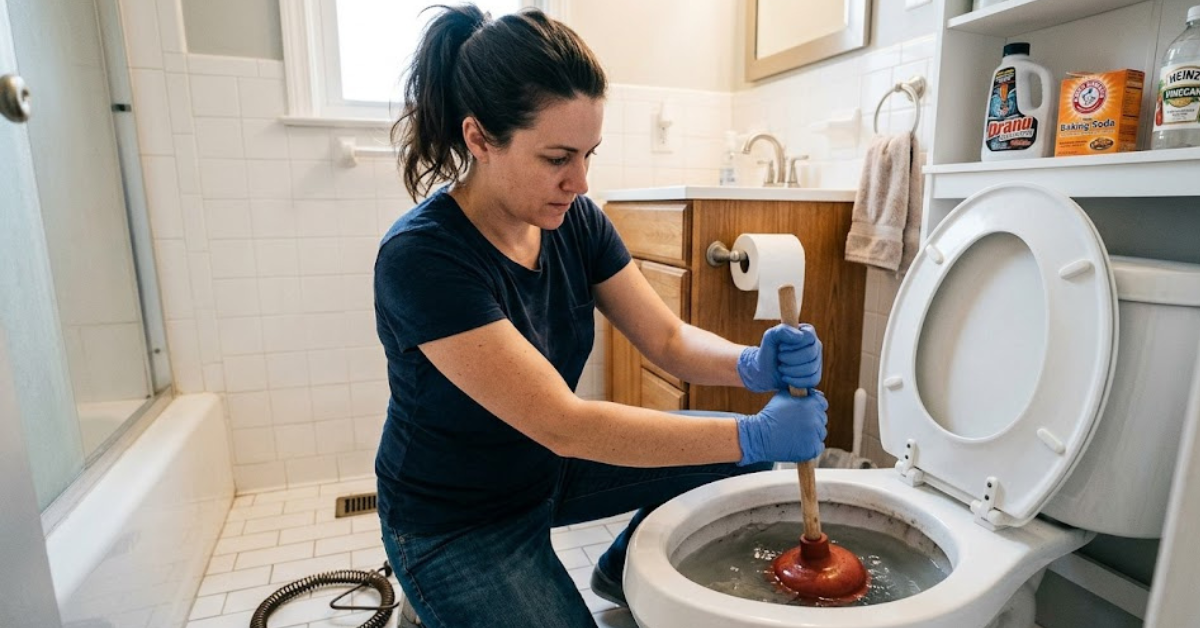
A plunger remains the most effective first-line solution for most toilet clogs.
Steps to Follow
- Use a flange plunger designed specifically for toilets.
- Ensure enough water covers the rubber cup.
- Position the plunger over the drain opening.
- Push down gently to create a seal.
- Pump vigorously for 15–20 seconds.
- Pull upward sharply.
Repeat several times if necessary.
A proper seal creates pressure that loosens and dislodges the obstruction. In many cases, this clears the clog within minutes.
How to Unclog Toilet Without a Plunger
Not everyone has a plunger available when a clog happens. Fortunately, several household items can help.
Use Hot Water
If you’re wondering how to unclog toilet with hot water, this method often works for organic waste and toilet paper clogs.
Instructions
- Heat a bucket of water until very hot but not boiling.
- Pour it slowly into the bowl from waist height.
- Wait 10–15 minutes.
- Check whether the water begins draining.
Avoid boiling water because it can crack porcelain toilets.
Try Dish Soap
Many homeowners successfully learn how to unclog toilet with dish soap using this simple technique.
Instructions
- Add half a cup of dish soap to the toilet bowl.
- Let it sit for 20–30 minutes.
- Pour in hot water.
- Wait for the clog to loosen.
The soap acts as a lubricant, helping waste slide through the pipes.
How to Unclog Toilet With Baking Soda and Vinegar
Another popular DIY solution uses ingredients commonly found in the kitchen.
Steps
- Pour one cup of baking soda into the toilet.
- Add two cups of vinegar slowly.
- Allow the mixture to fizz for 20–30 minutes.
- Follow with a bucket of hot water.
The chemical reaction may help break apart minor obstructions and deodorize the drain.
How to Unclog Toilet Full of Water
A toilet bowl filled nearly to the rim requires extra caution.
Best Approach
- Wait for the water level to drop naturally.
- Remove some water with a small container if necessary.
- Use a plunger or drain snake once the bowl is manageable.
Trying aggressive methods while the bowl is overflowing can create unnecessary cleanup.
How to Unclog Toilet When Water Is High
High water levels usually indicate a blockage close to the drain opening.
To handle this situation:
- Stop flushing immediately.
- Allow the water level to stabilize.
- Use a plunger first.
- Follow with hot water and dish soap if needed.
Patience often prevents an overflow disaster.
How to Unclog Toilet With a Snake
When simple methods fail, a toilet auger or plumbing snake can reach deeper blockages.
Using a Toilet Snake
- Insert the auger into the drain opening.
- Turn the handle clockwise.
- Continue feeding the cable until resistance is felt.
- Rotate to break apart or hook the obstruction.
- Slowly retract the cable.
This method is highly effective for stubborn clogs located farther down the pipe.
How to Unclog Toilet With Poop
Waste-related blockages are among the most common toilet issues.
To clear them:
- Start with a plunger.
- Add hot water and dish soap.
- Wait several minutes.
- Plunge again if necessary.
In most cases, the blockage softens and clears without requiring professional help.
How to Unclog Toilet When a Plunger Doesn’t Work
Sometimes plunging fails to solve the problem.
If you’re searching for how to unclog toilet when plunger doesn’t work, try these alternatives:
- Toilet auger
- Hot water treatment
- Dish soap method
- Baking soda and vinegar
- Professional drain cleaning tools
Persistent clogs may indicate deeper plumbing problems rather than a simple blockage near the bowl.
How to Unclog Toilet and Bathtub Drain at the Same Time
If both fixtures are draining poorly, the issue may not be the toilet itself.
Potential causes include:
- Main sewer line blockage
- Vent pipe obstruction
- Tree root intrusion
- Significant drain buildup
Multiple fixtures backing up simultaneously often require professional inspection.
How to Unclog Toilet Fast
When time matters, use these methods in order:
- Plunger
- Hot water
- Dish soap
- Toilet auger
- Professional assistance
Starting with the simplest solution usually produces the quickest results.
How to Prevent Future Toilet Clogs
Preventing clogs is much easier than fixing them.
Follow these habits:
- Flush only toilet paper and waste.
- Avoid flushing wipes, tissues, and paper towels.
- Use toilet paper in reasonable amounts.
- Schedule routine plumbing maintenance.
- Teach children what should never be flushed.
Small preventative measures can save significant frustration later.
Signs You Need a Plumber
While many clogs can be fixed at home, some situations require professional help.
Call a plumber if:
- Clogs occur repeatedly.
- Multiple drains back up simultaneously.
- Water backs up into tubs or sinks.
- Sewage odors are present.
- DIY methods fail consistently.
These symptoms may indicate a deeper sewer line issue.
Frequently Asked Questions
Can I unclog a toilet without a plunger?
Yes. Hot water, dish soap, baking soda and vinegar, or a toilet snake can often clear minor to moderate clogs.
Does hot water really unclog a toilet?
Hot water can soften waste and dissolve toilet paper buildup, making it easier for blockages to move through the drain.
Is baking soda and vinegar safe for toilets?
Yes. When used occasionally, the mixture is generally safe for porcelain toilets and household plumbing.
Why is my toilet clogged but not overflowing?
The blockage may be partial rather than complete, allowing some water to drain slowly.
How long should I plunge a clogged toilet?
Plunge continuously for 15–20 seconds before checking results. Repeat several times if needed.
What should I do if nothing works?
If every DIY method fails, the clog may be deeper in the plumbing system. A professional plumber can inspect and clear the blockage safely.
Conclusion
Knowing how to unclog toilet problems can save time, money, and stress. Most clogs can be resolved using simple techniques such as plunging, hot water treatments, dish soap, baking soda and vinegar, or a toilet auger. Acting quickly and using the right method for the situation often prevents a minor inconvenience from becoming a major plumbing emergency.
For the best results, start with the simplest solution and work your way toward more advanced methods. If the clog persists or multiple drains are affected, don’t hesitate to seek professional assistance before the problem worsens.