
Acne may disappear, but the scars it leaves behind can stick around for months or even years. Whether you’re dealing with dark spots, pitted scars, or uneven skin texture, learning how to get rid of acne scars can help restore your confidence and improve your skin’s appearance.
The good news is that acne scars are often treatable. From dermatologist procedures to at-home skincare routines and natural remedies, there are several ways to reduce their appearance. The best approach depends on the type of scar, your skin type, and how quickly you want to see results.
In this guide, you’ll discover the most effective treatments, common mistakes to avoid, and realistic expectations for achieving smoother, healthier-looking skin.
Understanding Different Types of Acne Scars
Before choosing a treatment, it’s important to identify the type of scar you’re dealing with.
Atrophic (Depressed) Scars
These scars form when the skin doesn’t produce enough collagen during healing.
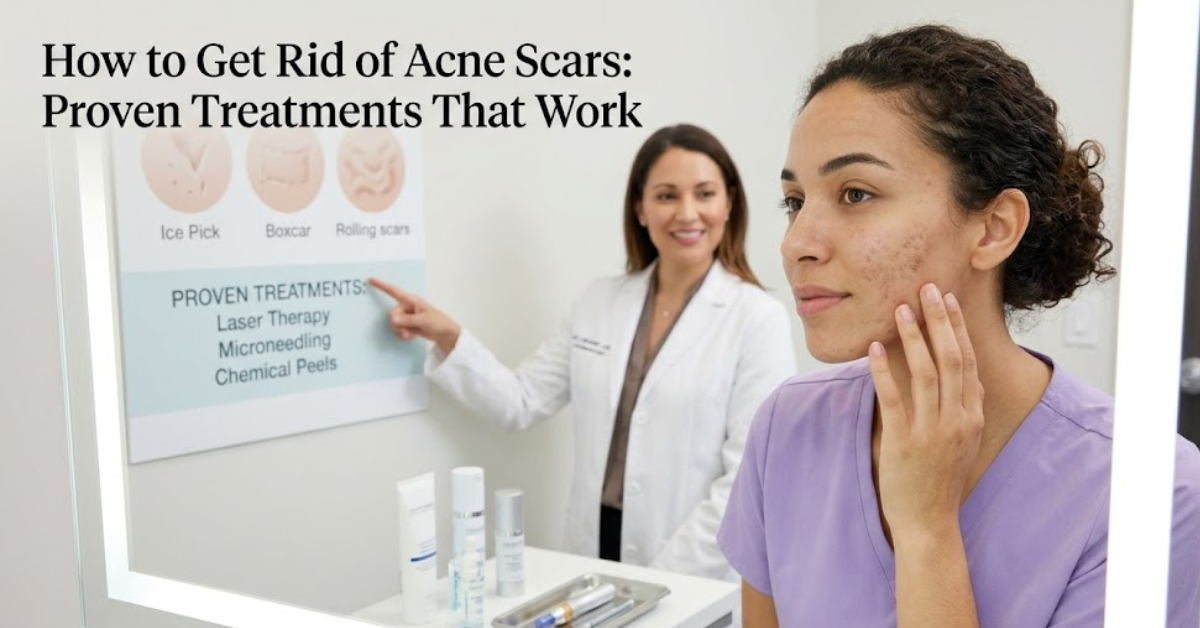
Common types include:
- Ice pick scars
- Boxcar scars
- Rolling scars
Hypertrophic and Keloid Scars
These raised scars occur when the body produces too much collagen during healing. They are more common on the chest, shoulders, back, and jawline.
Post-Inflammatory Hyperpigmentation (Dark Spots)
Many people mistake dark marks for scars. These spots are discoloration left behind after acne heals and usually fade faster than true scars.
How to Get Rid of Acne Scars Fast
If you’re searching for how to get rid of acne scars fast, it’s important to understand that there is no instant cure. However, some treatments produce faster and more noticeable results than others.
Professional Treatments That Deliver Faster Results
1. Laser Resurfacing
Laser treatments remove damaged skin layers and stimulate collagen production.
Benefits include:
- Smoother skin texture
- Reduced scar depth
- Improved skin tone
Many patients notice significant improvement after multiple sessions.
2. Microneedling
Microneedling uses tiny needles to create controlled micro-injuries in the skin.
This process:
- Triggers collagen production
- Improves texture
- Reduces the appearance of depressed scars
3. Chemical Peels
Chemical peels exfoliate damaged skin and encourage new skin growth.
They can help:
- Fade dark spots
- Improve uneven texture
- Brighten dull skin
4. Dermal Fillers
For deep acne scars, fillers can temporarily lift depressed areas and create a smoother appearance.
5. Subcision
This dermatologist-performed procedure breaks the fibrous bands pulling down certain scars, especially rolling scars.
How to Get Rid of Acne Scars at Home
Professional treatments aren’t the only option. Many people successfully reduce mild scars with consistent skincare.
Use Retinoids
Retinoids increase cell turnover and stimulate collagen production.
Benefits include:
- Smoother skin texture
- Reduced discoloration
- Prevention of future breakouts
Vitamin C Serums
Vitamin C is a powerful antioxidant that helps brighten skin and reduce pigmentation.
Regular use may:
- Fade post-acne marks
- Improve skin tone
- Protect against environmental damage
Niacinamide
Niacinamide is known for its anti-inflammatory and skin-repairing properties.
It may help:
- Reduce redness
- Minimize discoloration
- Strengthen the skin barrier
Alpha Hydroxy Acids (AHAs)
AHAs gently exfoliate the skin and promote new cell growth.
Popular options include:
- Glycolic acid
- Lactic acid
- Mandelic acid
Sunscreen Is Non-Negotiable
Sun exposure can make scars and dark spots more noticeable.
Apply a broad-spectrum sunscreen with SPF 30 or higher every day, even when it’s cloudy.
How to Get Rid of Acne Scars Naturally
Many people prefer natural approaches before considering stronger treatments.
Aloe Vera
Aloe vera contains soothing compounds that may help calm inflammation and support healing.
Honey
Raw honey has antibacterial and moisturizing properties that can improve overall skin health.
Green Tea Extract
Green tea contains antioxidants that may reduce redness and support skin repair.
Rosehip Oil
Rosehip oil is rich in vitamins and fatty acids that may help improve skin texture over time.
While natural remedies can support healthy skin, they generally work more slowly than medical treatments and are unlikely to eliminate deep scars completely.
Can You Get Rid of Acne Scars Overnight?
Many people search for how to get rid of acne scars overnight, but the reality is that true acne scars cannot disappear in a single night.
What you can do overnight is:
- Reduce redness and irritation
- Improve hydration
- Make scars appear less noticeable temporarily
Using a gentle moisturizer, niacinamide serum, and a good night’s sleep can help your skin look healthier by morning, but lasting improvements require consistency.
How to Get Rid of Acne Scars and Dark Spots
Dark spots often fade more easily than textured scars.
Ingredients that work particularly well include:
- Vitamin C
- Niacinamide
- Azelaic acid
- Kojic acid
- Retinoids
- Tranexamic acid
Combining these ingredients with daily sun protection often produces the best results.
Treating Acne Scars on Different Areas of the Body
Acne scars don’t only affect the face. Many people experience scarring on other parts of the body as well.
How to Get Rid of Acne Scars on Face
Facial scars respond well to:
- Retinoids
- Chemical peels
- Microneedling
- Laser treatments
Because facial skin heals relatively quickly, improvements are often noticeable within a few months.
How to Get Rid of Acne Scars on Back
Back scars can be stubborn because the skin is thicker.
Helpful treatments include:
- Salicylic acid body washes
- Chemical peels
- Laser therapy
- Microneedling
How to Get Rid of Acne Scars on Chest
Chest scars often have a higher risk of becoming raised.
Early treatment with silicone gels, corticosteroid injections, or laser therapy may help.
How to Get Rid of Acne Scars on Butt and Buttocks
Body acne can leave marks in this area due to friction and inflammation.
Strategies include:
- Gentle exfoliation
- Retinoid creams
- Chemical exfoliants
- Moisturizing regularly
Chin, Forehead, and Nose Scars
These areas often develop scars from repeated breakouts and picking.
Targeted treatments such as retinoids, microneedling, and sunscreen can significantly improve their appearance over time.
How Dermatologists Treat Acne Scars
If over-the-counter products aren’t helping, a dermatologist can create a personalized treatment plan.
A dermatologist may recommend:
- Prescription retinoids
- Microneedling
- Laser resurfacing
- Chemical peels
- Subcision
- Dermal fillers
- Corticosteroid injections for raised scars
The most effective treatment often combines several techniques rather than relying on one solution.
Common Mistakes That Make Acne Scars Worse
Avoid these habits if you’re trying to improve your skin:
- Picking or squeezing pimples
- Skipping sunscreen
- Over-exfoliating
- Using harsh scrubs
- Frequently switching skincare products
- Ignoring active acne
Preventing new breakouts is one of the best ways to avoid future scarring.
What People Commonly Discuss About Acne Scar Removal
Online skincare communities often share experiences with treatments such as:
- Microneedling
- Retinoids
- Vitamin C serums
- Chemical peels
- Laser procedures
The most consistent takeaway is that patience and consistency usually produce better results than chasing quick fixes.
Frequently Asked Questions
What is the fastest way to remove acne scars?
Professional treatments such as laser resurfacing, microneedling, and chemical peels typically provide the fastest visible improvements.
Can acne scars go away naturally?
Some mild scars and dark spots can fade over time, especially with proper skincare and sun protection. Deep scars are less likely to disappear completely without treatment.
How long does it take for acne scars to fade?
Dark spots may improve within a few months, while deeper scars can take six months to several years to improve, depending on treatment.
Does vitamin C help acne scars?
Yes. Vitamin C can help brighten dark marks, improve skin tone, and support collagen production.
Can microneedling remove acne scars permanently?
Microneedling can significantly improve acne scars by stimulating collagen production. Results can be long-lasting, though multiple sessions are often required.
Are home remedies effective for acne scars?
Home remedies may help with discoloration and overall skin health, but they are generally less effective for deep or severe scars.
Which acne scars are hardest to treat?
Ice pick scars are often considered the most challenging because they extend deep into the skin.
Should I see a dermatologist for acne scars?
If your scars are deep, widespread, or affecting your confidence, consulting a dermatologist is often the most effective path to improvement.
Conclusion
Learning how to get rid of acne scars starts with understanding the type of scarring you have and choosing treatments that match your needs. While there is no miracle overnight solution, a combination of proven skincare ingredients, sun protection, and professional treatments can dramatically improve skin texture and appearance over time.
Whether you’re dealing with facial scars, body acne marks, or lingering dark spots, consistency is the key to success. Start with a solid skincare routine, avoid picking blemishes, and consider professional options if you want faster or more dramatic results. With patience and the right approach, smoother and healthier-looking skin is an achievable goal.