
A bright smile can make a huge difference in confidence, first impressions, and overall appearance. It’s no surprise that millions of people search for ways to improve tooth color every year. If you’ve been wondering how to whiten teeth safely without spending a fortune, you’re not alone.
The good news is that there are several effective methods available, from professional dental treatments to natural home remedies. Whether you want to learn how to whiten teeth at home, remove stains caused by coffee, or get a brighter smile without damaging enamel, this guide covers everything you need to know.
Why Teeth Become Yellow or Stained
Before trying any whitening method, it helps to understand why teeth lose their brightness in the first place.
Common causes include:
- Coffee, tea, and red wine
- Smoking or tobacco use
- Poor oral hygiene
- Aging and enamel thinning
- Certain medications
- Sugary or acidic foods
- Plaque and tartar buildup
Some stains only affect the surface of the teeth, while others penetrate deeper into the enamel. The type of discoloration often determines which whitening method works best.
How to Whiten Teeth at Home
Many people prefer at-home whitening because it’s affordable, convenient, and easy to maintain. While home remedies may not produce instant Hollywood-level results, they can noticeably improve tooth color when used correctly.
Brush Properly and Consistently
The simplest way to brighten your smile is to improve your brushing habits.
Dentists recommend:
- Brushing twice daily for two minutes
- Using a soft-bristled toothbrush
- Replacing your toothbrush every 3 months
- Flossing daily
- Using fluoride toothpaste
Whitening toothpaste can help remove surface stains, especially those caused by coffee or smoking.
Use Whitening Strips
Over-the-counter whitening strips are one of the most effective home options. They contain low levels of peroxide that help break down stains over time.
Most people notice results within 1 to 2 weeks. However, overusing strips may lead to tooth sensitivity.
Try Whitening Toothpaste
Whitening toothpaste does not bleach teeth dramatically, but it can polish away stains and help maintain results from other treatments.
Look for products approved by dental associations and avoid abrasive formulas that can wear down enamel.
How to Whiten Teeth Naturally
Natural remedies are popular because they use common household ingredients and avoid harsh chemicals. However, it’s important to use them carefully.
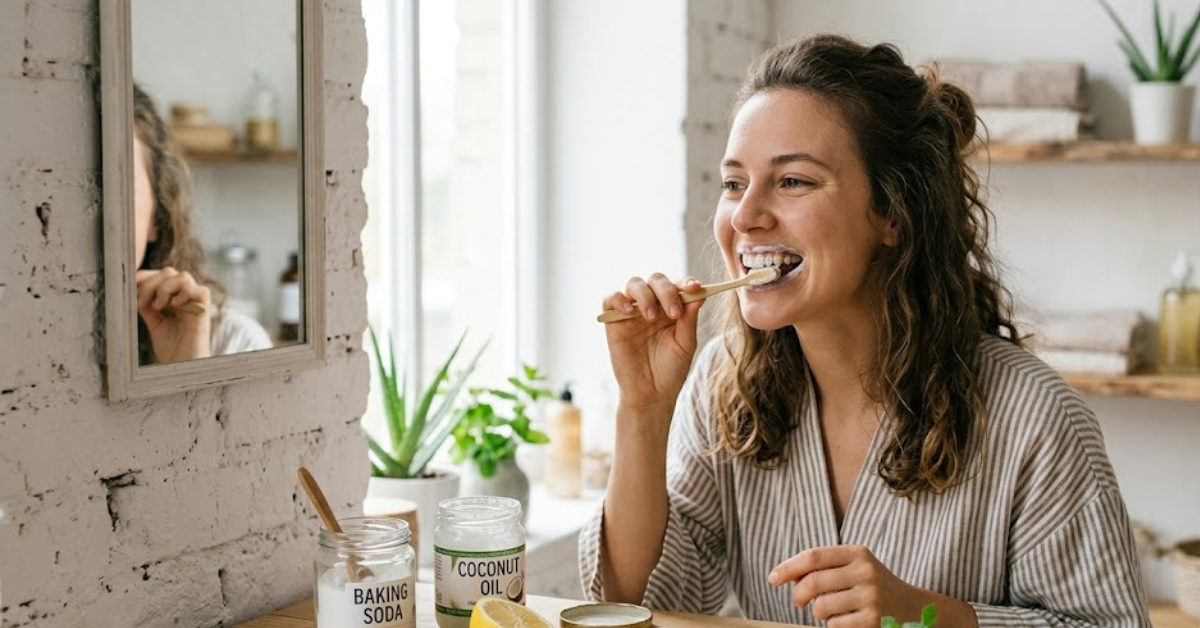
How to Whiten Teeth With Baking Soda
Baking soda is mildly abrasive and helps scrub away surface stains. It also creates an alkaline environment in the mouth that may reduce bacteria growth.
To use it safely:
- Mix a small amount of baking soda with water
- Brush gently for about 1 minute
- Rinse thoroughly
- Limit use to a few times per week
Using baking soda too often can wear down enamel, so moderation is key.
How to Whiten Teeth With Hydrogen Peroxide
Hydrogen peroxide is a common ingredient in professional and store-bought whitening products.
You can use a diluted solution as a mouth rinse or combine a small amount with baking soda to form a paste. Be careful not to swallow it, and avoid excessive use to prevent gum irritation.
How to Whiten Teeth With Coconut Oil
Oil pulling with coconut oil has gained popularity as a natural oral care practice.
Here’s how it works:
- Swish 1 tablespoon of coconut oil in your mouth for 10–15 minutes
- Spit it out
- Rinse and brush normally
While scientific evidence on whitening is limited, many people report cleaner-looking teeth and fresher breath.
How to Whiten Teeth Fast
If you need quicker results for an event or photo session, there are a few faster options available.
Professional Teeth Whitening
Dentist-performed whitening treatments are the fastest and most effective solution. These procedures use stronger bleaching agents combined with LED or laser technology.
Professional whitening can brighten teeth several shades in a single visit.
Benefits include:
- Faster results
- Safer supervision
- Customized treatment
- Better stain removal
The downside is the higher cost compared to home methods.
Whitening Kits With LED Lights
Many at-home kits now include LED technology designed to speed up whitening results.
These kits can work well for mild to moderate staining when used consistently according to instructions.
How to Whiten Teeth Overnight
There is no truly magical overnight cure, but some methods can noticeably improve brightness quickly.
For best short-term results:
- Brush and floss thoroughly before bed
- Use whitening strips overnight if directed
- Avoid staining foods and drinks
- Use a whitening toothpaste consistently
Be cautious of products promising extreme overnight transformations, as they may harm enamel.
How to Whiten Teeth Without Damaging Enamel
Protecting enamel should always be the priority. Some whitening trends online can do more harm than good.
Avoid:
- Charcoal toothpaste used aggressively
- Lemon juice or acidic DIY remedies
- Overusing baking soda
- Excessive bleaching treatments
Safe whitening habits include:
- Following product instructions carefully
- Taking breaks between treatments
- Using fluoride toothpaste
- Drinking water after dark beverages
- Visiting a dentist regularly
Healthy enamel is more important than ultra-white teeth.
How to Whiten Teeth With Braces
Whitening teeth while wearing braces can be tricky because brackets block parts of the tooth surface.
Dentists usually recommend waiting until braces are removed before using strong whitening products. However, you can still reduce staining during orthodontic treatment.
Helpful tips include:
- Brush after every meal
- Use interdental brushes
- Avoid staining drinks
- Use whitening toothpaste carefully
Some people also search for how to whiten teeth with braces with baking soda, but abrasive mixtures should be used cautiously to avoid uneven whitening around brackets.
Foods That Help Keep Teeth White
Diet plays a surprisingly large role in tooth color.
Foods that may help maintain a brighter smile include:
- Apples
- Strawberries
- Celery
- Carrots
- Cheese
- Yogurt
Crunchy fruits and vegetables can help clean teeth naturally while stimulating saliva production.
Foods and Drinks That Cause Stains
Limiting stain-causing foods can help preserve whitening results.
Major culprits include:
- Coffee
- Tea
- Red wine
- Cola
- Soy sauce
- Tomato sauce
- Dark berries
Using a straw and rinsing your mouth with water afterward may reduce staining.
How to Whiten Teeth in Photos
Not every whitening solution involves actual dental treatment. Many people want brighter teeth specifically for pictures and social media.
How to Whiten Teeth in Photoshop
In photo editing software, whitening teeth is usually done using adjustment brushes or selective color correction tools. Lowering yellow saturation and slightly increasing brightness creates a natural look.
How to Whiten Teeth in Lightroom
Lightroom offers brush tools that allow selective whitening adjustments without affecting the rest of the image. The key is subtle editing to avoid an unrealistic appearance.
How to Whiten Teeth in Pictures Naturally
Good lighting, balanced exposure, and avoiding overly warm color tones can make teeth appear naturally brighter even before editing.
Common Teeth Whitening Mistakes
Many people accidentally damage their teeth while chasing fast results.
Avoid these common mistakes:
- Whitening too frequently
- Using abrasive DIY methods daily
- Ignoring tooth sensitivity
- Using expired whitening products
- Skipping dental checkups
Whitening should improve your smile, not harm your oral health.
FAQ About Teeth Whitening
Does teeth whitening really work?
Yes, most whitening methods work to some extent. Professional treatments usually provide the most dramatic results.
Is whitening safe for sensitive teeth?
Many products are designed specifically for sensitive teeth. Using lower-peroxide formulas and spacing out treatments can help reduce discomfort.
Can yellow teeth become white again?
In many cases, yes. Surface stains respond well to whitening treatments, although deeper discoloration may require professional care.
How long do whitening results last?
Results can last from several months to a few years depending on diet, oral hygiene, and lifestyle habits like smoking.
Can I whiten crowns or veneers?
No. Whitening products only work on natural teeth. Dental restorations usually need replacement if color matching becomes an issue.
What is the fastest way to whiten teeth?
Professional dental whitening remains the fastest and most effective option for noticeable results.
Conclusion
Learning how to whiten teeth safely is about choosing methods that improve your smile without damaging enamel. From whitening toothpaste and baking soda to professional dental treatments, there are options for nearly every budget and lifestyle.
If you want lasting results, focus on consistent oral hygiene, stain prevention, and safe whitening habits rather than quick fixes. A healthy smile will always look better than one that has been overtreated.
Whether you prefer natural remedies, at-home kits, or dentist-supervised treatments, the best approach is the one that keeps your teeth both bright and healthy for the long term.