
If you want broader shoulders and a more athletic upper body, the dumbbell lateral raise is one of the best isolation exercises you can do. It looks simple, but when performed correctly, it can dramatically improve shoulder shape, strength, and symmetry.
Many people rush through this movement with poor technique, which reduces results and increases joint stress. In this guide, you’ll learn proper form, muscles worked, common mistakes, and the best variations to get the most from every rep.
What Is a Dumbbell Lateral Raise?
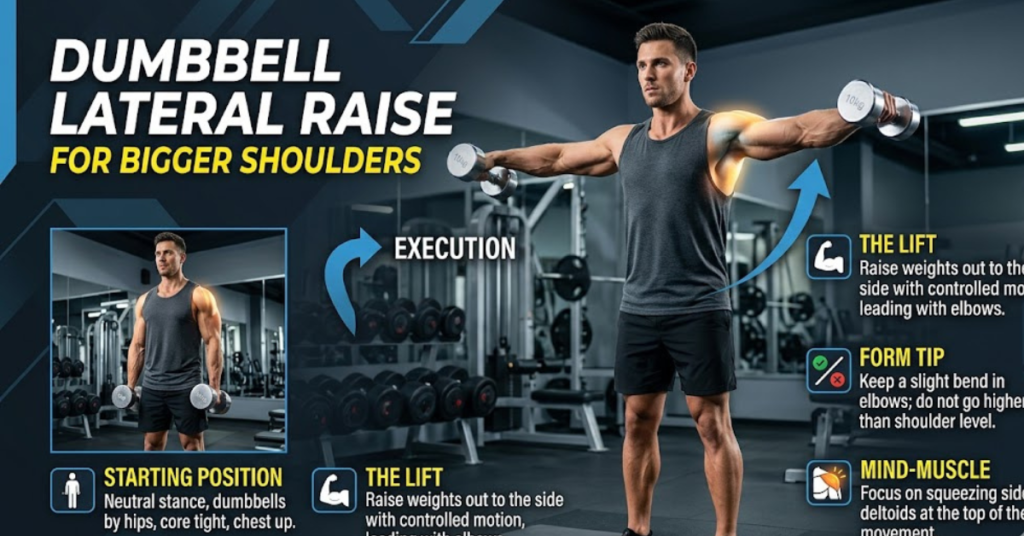
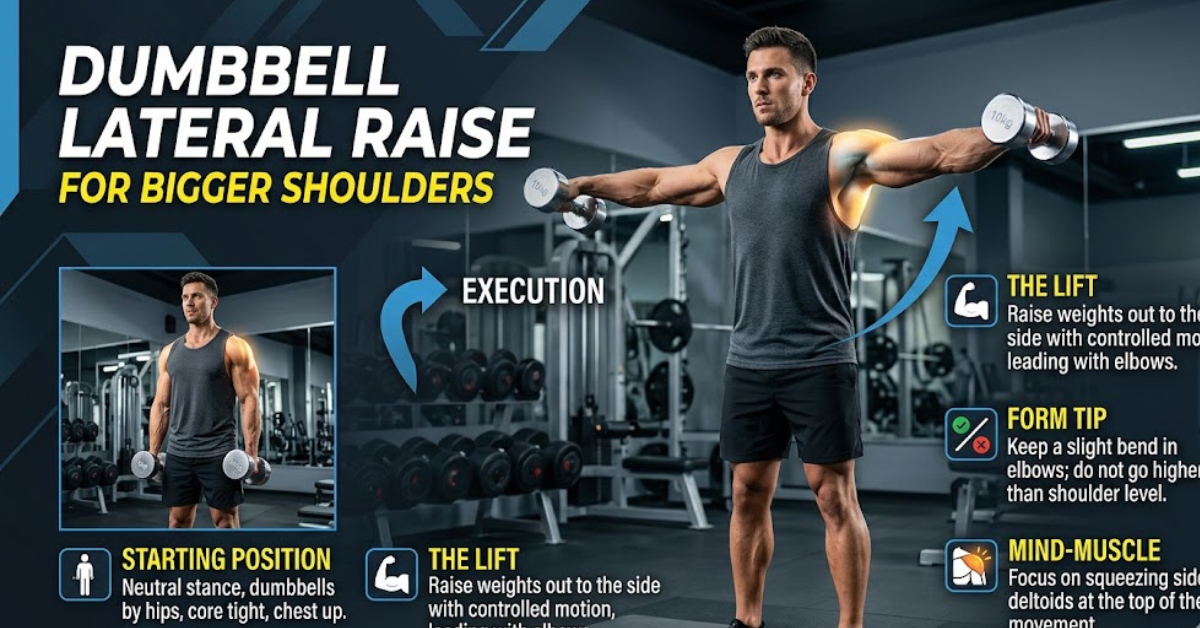
The dumbbell lateral raise is a shoulder exercise where you lift dumbbells out to your sides until your arms reach shoulder height. The movement mainly targets the side deltoids, which are responsible for shoulder width and roundness.
Because it isolates the shoulders, it’s commonly used in bodybuilding, general fitness, and upper-body training programs.
Dumbbell Lateral Raise Muscles Worked
This exercise primarily trains the shoulder area, but several supporting muscles also assist.
Primary Muscles
- Lateral deltoids (side shoulders)
- Anterior deltoids (front shoulders slightly involved)
Secondary Muscles
- Upper traps
- Rotator cuff stabilizers
- Core muscles
- Forearms for grip support
If your goal is wider-looking shoulders, strengthening the lateral delts is especially important.
How to Perform Dumbbell Lateral Raise Proper Form
Using strict technique matters more than lifting heavy weight.
Standing Dumbbell Lateral Raise
- Stand tall with a dumbbell in each hand.
- Keep a slight bend in your elbows.
- Raise the weights out to your sides.
- Stop when arms reach shoulder level.
- Lower slowly under control.
- Repeat for desired reps.
Key Form Tips
- Keep your chest up and core braced.
- Lead with elbows, not hands.
- Avoid shrugging shoulders upward.
- Use controlled motion, not momentum.
- Keep wrists neutral.
Mastering dumbbell lateral raise proper form helps keep tension on the shoulders where it belongs.
Common Dumbbell Lateral Raise Mistakes
Even experienced lifters often make these errors.
1. Swinging the Weights
Using body momentum reduces shoulder activation. Lower the weight if needed.
2. Raising Too High
Going above shoulder level often shifts tension to traps.
3. Using Weights That Are Too Heavy
This is an isolation movement. Moderate or light weights usually work best.
4. Shrugging the Shoulders
Keep traps relaxed and shoulders down.
5. Rushing Reps
Slower reps increase muscle tension and control.
Best Dumbbell Lateral Raise Variations
Changing angles and positions can improve results and reduce boredom.
Seated Dumbbell Lateral Raise
Perform while seated on a bench. This removes leg drive and momentum.
Best for: Strict form and muscle isolation.
Leaning Dumbbell Lateral Raise
Hold onto a stable object and lean slightly away while raising one arm.
Best for: Increased range of motion and stronger contraction.
Incline Dumbbell Lateral Raise
Lie chest-supported on an incline bench and raise arms outward.
Best for: Preventing cheating and improving control.
Bent Over Dumbbell Lateral Raise
Hinge forward and lift weights out to the sides.
Best for: Rear deltoid development.
Side Dumbbell Lateral Raise
A general term often used for the classic side-raising motion.
Best for: Overall shoulder width.
Dumbbell Lateral Raise Benefits
Adding this exercise to your routine offers several advantages.
- Builds wider, rounder shoulders
- Improves shoulder symmetry
- Strengthens stabilizer muscles
- Enhances pressing performance
- Supports better posture
- Great for home or gym workouts
How Many Reps and Sets Should You Do?
Because it’s an isolation exercise, moderate to higher reps often work best.
Beginners
- 2–3 sets of 12–15 reps
Intermediate
- 3–4 sets of 10–15 reps
Advanced
- 4–5 sets of 12–20 reps with controlled tempo
Focus on quality contractions rather than ego lifting.
Dumbbell Lateral Raise in a Shoulder Workout
Here’s where it fits best:
- Overhead press
- Dumbbell lateral raise
- Rear delt raises
- Front raises (optional)
- Triceps work
Placing it after compound presses is usually ideal.
Can Women Do Dumbbell Lateral Raises?
Absolutely. The dumbbell lateral raise woman search trend reflects how popular this movement is for toning shoulders and improving posture. It’s effective for all genders and fitness levels.
Using lighter weights with strong control often delivers excellent results.
Home vs Gym Training
You don’t need fancy machines to grow shoulders.
At Home
- Adjustable dumbbells
- Resistance bands as backup
- Limited space needed
In the Gym
- More weight options
- Mirrors for form checks
- Easy combination with other shoulder exercises
That makes the dumbbell lateral raise shoulder exercise gym and home-friendly alike.
FAQ About Dumbbell Lateral Raise
What muscles does a dumbbell lateral raise work?
It mainly targets the side deltoids, with support from traps and shoulder stabilizers.
How heavy should I go?
Choose a weight you can control with strict form for 10–20 reps.
Should elbows be bent?
Yes, a slight bend helps reduce joint stress and improves leverage.
Is seated better than standing?
Seated versions reduce cheating, while standing versions train stability.
Why do I feel it in my traps?
You may be shrugging or lifting too heavy. Lower the weight and keep shoulders down.
Can beginners do this exercise?
Yes. Start light and focus on clean movement patterns.
Conclusion
The dumbbell lateral raise is one of the most effective exercises for building wider, more defined shoulders. It doesn’t require heavy weight, complicated equipment, or advanced skill—just consistency and strong technique.
Whether you choose standing, seated, leaning, or incline variations, prioritize control and proper form. Add this movement to your weekly routine, progress gradually, and you’ll build stronger, more impressive shoulders over time.