
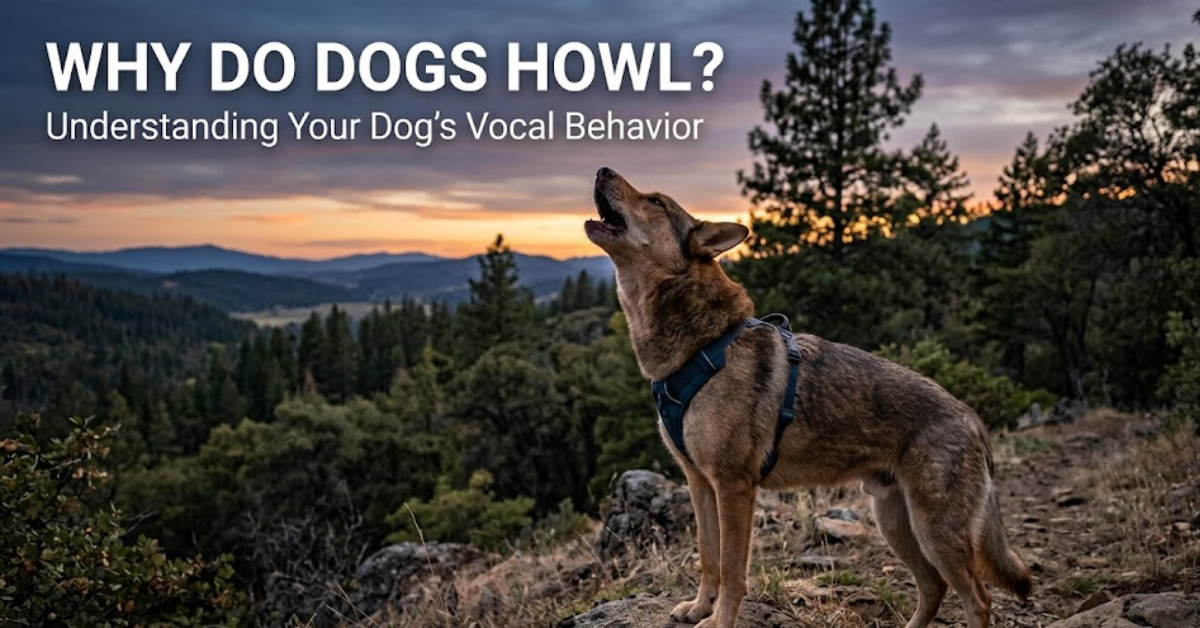

Have you ever heard your dog suddenly throw its head back and let out a long, dramatic howl? Whether it happens when an ambulance passes by, during the middle of the night, or when you start singing, many dog owners find themselves asking: why do dogs howl?
Howling is one of the most fascinating ways dogs communicate. While barking is more common in everyday situations, howling has deep roots in canine history and serves several important purposes. Understanding why dogs howl can help you better interpret your pet’s emotions, needs, and instincts.
In this guide, we’ll explore the science behind dog howling, the most common triggers, and when this behavior may signal a problem.
Why Do Dogs Howl?
Dogs howl because it is a natural form of communication inherited from their wolf ancestors. In the wild, wolves use howls to locate pack members, defend territory, and communicate over long distances.
Although modern dogs have been domesticated for thousands of years, many still retain this instinctive behavior. Howling can be triggered by sounds, emotions, social interactions, or environmental factors.
Common reasons dogs howl include:
- Communication with other dogs
- Responding to certain sounds
- Seeking attention
- Expressing loneliness
- Showing excitement
- Reacting to anxiety or stress
- Following inherited instincts
The exact reason often depends on the situation and your dog’s personality.
Why Do Dogs Howl at Sirens?
One of the most searched questions among dog owners is why do dogs howl at sirens.
Sirens produce high-pitched sounds that can resemble the long-distance calls used by wolves and wild canines. To your dog, the sound may seem like another animal communicating from afar.
Dogs often respond by howling back because they instinctively interpret the sound as a call. This explains:
- Why dogs howl when they hear sirens
- Why dogs howl with sirens
- Why dogs howl at fire trucks
- Why dogs howl at ambulance sirens
Not every dog reacts this way, but breeds with stronger vocal tendencies, such as Huskies, Beagles, and Alaskan Malamutes, are more likely to join in.
Why Do Dogs Howl at Night?
Many owners wonder why do dogs howl at night, especially when everything seems quiet.
Nighttime howling may occur because dogs are more alert to distant sounds after dark. Reduced background noise makes environmental sounds easier to hear.
Other possible causes include:
Loneliness
If a dog feels isolated, nighttime can intensify feelings of separation and boredom.
Territorial Responses
Dogs may hear other animals, distant dogs, or unusual sounds and respond with vocalizations.
Attention-Seeking Behavior
Some dogs learn that howling gets a response from their owners, even if that response is simply checking on them.
Medical Issues
Pain, discomfort, hearing loss, or cognitive decline in senior dogs can sometimes cause excessive nighttime vocalization.
If night howling becomes frequent or sudden, a veterinary examination may be worthwhile.
Why Do Dogs Howl at the Moon?
The idea that dogs specifically howl at the moon is one of the oldest canine myths.
In reality, there is little scientific evidence that dogs are responding directly to the moon itself. The behavior likely appears connected because dogs often howl at night when the moon is visible.
The image of a dog looking upward while howling simply helps project the sound over greater distances. This posture improves vocal communication rather than indicating any special relationship with the moon.
Why Do Dogs Howl to Music?
Many dogs react strongly to musical sounds. This raises questions like why do dogs howl to music, why do dogs howl at music, and why do dogs howl when you sing.
Certain musical notes, especially sustained high-pitched tones, resemble the frequencies that naturally trigger canine vocal responses.
Dogs may howl when they hear:
- Singing voices
- Violins
- Flutes
- Harmonicas
- Sirens in songs
- Long musical notes
In many cases, your dog isn’t distressed. They’re simply joining what they perceive as a group vocal activity.
Why Do Dogs Howl When You Howl?
If you’ve ever howled and immediately received a response, you’re not alone.
Many owners ask why do dogs howl when you howl or why do dogs howl when I howl.
Dogs are highly social animals. When they hear you howl, they may interpret it as communication from a member of their social group. Their response can be seen as participation in a shared activity.
This behavior may indicate:
- Social bonding
- Pack-oriented instincts
- Excitement
- Communication attempts
Similarly, why do dogs howl with you can often be explained by their desire to join and interact with family members.
Why Do Dogs Howl Together?
Group howling is common among wolves and remains present in many domestic dogs.
When multiple dogs howl simultaneously, they’re engaging in a behavior known as social facilitation. One dog’s howl triggers others to join in.
Dogs howl together for several reasons:
- Strengthening social bonds
- Coordinating group communication
- Expressing excitement
- Responding to shared stimuli
This behavior is particularly common in multi-dog households and among highly social breeds.
Why Do Dogs Howl When Alone?
Another common concern is why do dogs howl when alone or why do dogs howl when you leave.
This type of howling is often linked to separation anxiety or loneliness.
Signs that separation anxiety may be involved include:
- Destructive behavior
- Excessive barking
- Pacing
- Scratching doors
- House-soiling
- Persistent vocalization
Dogs form strong attachments to their owners. When left alone, some may howl as a way of calling their family back.
If separation-related howling is frequent, gradual training and enrichment activities can help reduce stress.
Why Do Dogs Howl in Their Sleep?
Hearing your dog howl while sleeping can be surprising.
The answer to why do dogs howl in their sleep is often similar to why humans talk during sleep. During REM sleep, dogs experience dreams and brain activity patterns that resemble wakefulness.
You may notice:
- Twitching paws
- Tail movement
- Soft barking
- Whining
- Brief howling sounds
Most sleep-related howling is completely normal and doesn’t require intervention.
Dog Breeds That Tend to Howl More
While any dog can howl, some breeds are naturally more vocal.
Common howling breeds include:
- Siberian Husky
- Alaskan Malamute
- Beagle
- Bloodhound
- Basset Hound
- American Eskimo Dog
- Dachshund
- Coonhound
These breeds often have stronger vocal instincts due to their historical roles in hunting, tracking, or pack communication.
When Should You Be Concerned About Howling?
Occasional howling is normal. However, excessive or sudden howling may indicate an underlying issue.
Consider consulting a veterinarian if your dog:
- Starts howling unexpectedly
- Shows signs of pain
- Appears confused or disoriented
- Experiences changes in appetite
- Displays anxiety-related behaviors
- Howls excessively throughout the day
Medical conditions, hearing problems, and cognitive changes can sometimes contribute to unusual vocal behavior.
How to Reduce Excessive Howling
If your dog’s howling becomes disruptive, try these strategies:
Increase Physical Exercise
A tired dog is less likely to engage in excessive vocalization.
Provide Mental Stimulation
Puzzle toys, training sessions, and interactive games help prevent boredom.
Address Separation Anxiety
Gradually teach your dog to feel comfortable spending time alone.
Avoid Rewarding Unwanted Howling
Consistently giving attention during howling episodes may reinforce the behavior.
Identify Triggers
Understanding whether sounds, loneliness, or anxiety are causing the behavior makes it easier to manage.
Frequently Asked Questions
Why do dogs howl when they hear a siren?
Dogs often interpret sirens as long-distance communication sounds and instinctively respond with their own howl.
Why do dogs howl at ambulance sirens more than other noises?
Ambulance sirens typically produce frequencies that closely resemble sounds known to trigger canine vocal responses.
Is howling a sign that a dog is unhappy?
Not necessarily. Dogs howl for many reasons, including communication, excitement, social interaction, and instinctive behavior.
Why does my dog howl when I sing?
Your singing may resemble a prolonged vocal call, encouraging your dog to join in.
Do all dogs howl?
No. Some breeds rarely howl, while others are naturally more vocal due to genetics and breed characteristics.
Why does my dog howl every time I leave the house?
This may indicate loneliness, boredom, or separation anxiety, particularly if accompanied by other stress-related behaviors.
Conclusion
So, why do dogs howl? The answer lies in a combination of instinct, communication, social bonding, and environmental triggers. Dogs may howl in response to sirens, music, singing, loneliness, nighttime sounds, or simply because they’re interacting with their family members.
In most cases, howling is completely normal and reflects your dog’s natural way of expressing itself. By paying attention to the circumstances surrounding the behavior, you can better understand what your dog is trying to communicate.
If your dog’s howling becomes excessive or appears linked to distress, anxiety, or health concerns, consulting a veterinarian or professional dog trainer can help identify the cause. Understanding your dog’s voice is one of the best ways to strengthen your bond and ensure their well-being.