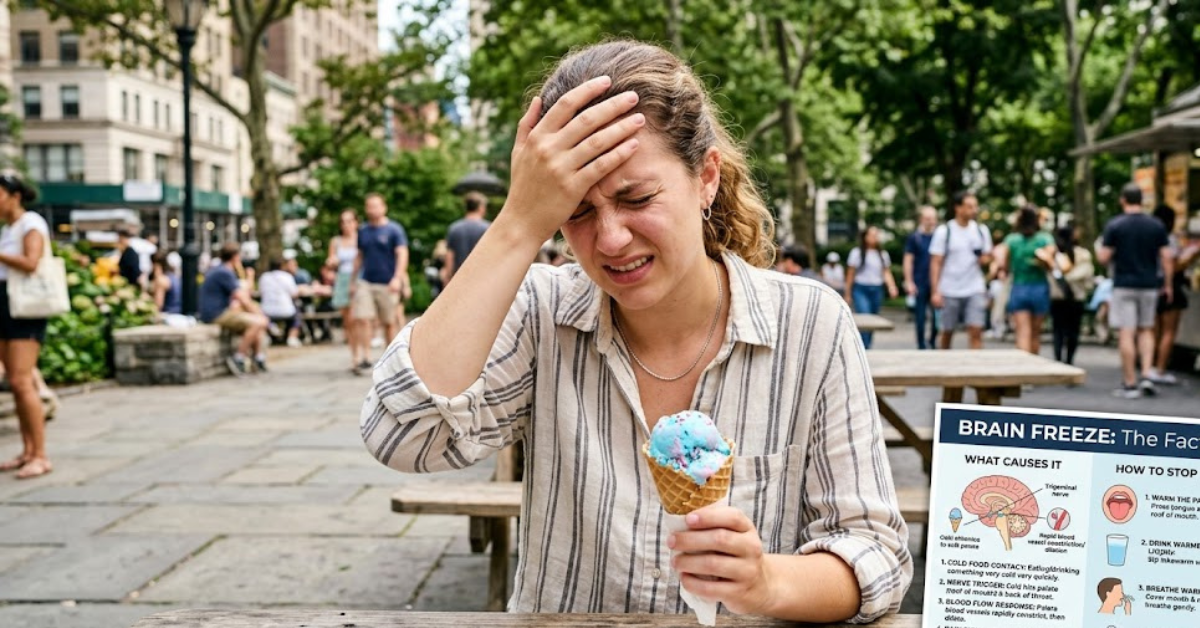

You take a big bite of ice cream or gulp down an icy drink too fast, and suddenly a sharp pain shoots through your forehead. That intense, quick headache is known as brain freeze. While it may feel alarming for a few seconds, it’s actually a very common and harmless reaction.
Many people wonder what causes brain freeze when eating ice cream or drinking something extremely cold. The answer lies in how your nerves and blood vessels react to sudden temperature changes in the mouth and throat. Scientists have studied this strange sensation for years, and the explanation is surprisingly fascinating.
In this article, we’ll break down what causes brain freeze scientifically, why it happens so quickly, how long it lasts, and what you can do to stop it fast.
What Is Brain Freeze?
Brain freeze is a short-lasting headache triggered by cold foods or beverages. It’s medically known as “sphenopalatine ganglioneuralgia,” though most people simply call it an ice cream headache.
The pain usually appears in the:
- Forehead
- Temples
- Behind the eyes
- Upper face
It often peaks within seconds and disappears just as quickly.
What Causes Brain Freeze Scientifically?
The scientific explanation behind brain freeze involves nerves, blood vessels, and rapid temperature changes.
When something extremely cold touches the roof of your mouth or the back of your throat, the blood vessels in that area rapidly constrict and then expand. This sudden change triggers nearby nerves, especially the trigeminal nerve, which is responsible for facial sensations and pain.
Your brain interprets that signal as pain coming from your forehead, even though the cold source is in your mouth. This is called “referred pain.”
Here’s the process step by step:
- Cold food touches the palate
- Blood vessels tighten rapidly
- The body reacts by reopening the vessels
- Nearby nerves detect the change
- Pain signals travel to the brain
- You feel a sudden headache
This is the core of what causes brain freeze headaches and why the pain can feel so intense despite lasting only a short time.
What Causes Brain Freeze When Eating Ice Cream?
Ice cream is one of the most common triggers because it combines extreme cold with quick consumption.
When you eat ice cream too fast:
- The roof of your mouth cools rapidly
- Nerve endings become overstimulated
- Blood flow changes abruptly
- The trigeminal nerve sends pain signals
That’s why people frequently search for what causes brain freeze from ice cream or what causes brain freeze ice cream headache. The colder the food and the faster you eat it, the more likely you are to experience the pain.
What Causes Brain Freeze From Cold Drinks?
Cold drinks can trigger the same reaction, especially frozen beverages, slushies, and iced drinks consumed quickly through a straw.
The reason cold drinks are such a common trigger is because the icy liquid directly contacts sensitive tissues at the back of the throat and upper palate.
Common drink triggers include:
- Slushies
- Milkshakes
- Ice water
- Frozen coffee drinks
- Smoothies
People often ask what causes brain freeze from cold drinks because the pain can appear even faster than with solid foods.
Why Does Brain Freeze Feel Like a Headache?
Brain freeze feels like a headache because of the trigeminal nerve, one of the largest nerves in the head.
This nerve helps process sensations from:
- The face
- Mouth
- Sinuses
- Forehead
When cold temperatures stimulate this nerve, the brain sometimes misinterprets the location of the pain. Instead of feeling discomfort in the mouth, you experience pain in the forehead or temples.
This explains what causes brain freeze like headaches and why the sensation resembles a migraine for a few seconds.
How Long Does Brain Freeze Last?
Most brain freeze episodes last:
- 10 to 30 seconds
- Rarely more than a minute
The pain usually fades once the mouth returns to a normal temperature and blood vessels stabilize again.
Although the sensation can be surprisingly sharp, brain freeze is not dangerous for most people.
Who Gets Brain Freeze Most Often?
Brain freeze can happen to anyone, but some people are more likely to experience it.
Research suggests it may be more common in:
- Children and teenagers
- People who eat quickly
- Individuals prone to migraines
- Those sensitive to temperature changes
Migraine sufferers may notice stronger or more frequent episodes because their nervous systems are already highly sensitive.
Can Brain Freeze Happen in the Chest?
Some people describe a cold tightness in the chest after consuming icy foods or beverages. While this is different from a traditional brain freeze, cold temperatures can sometimes trigger muscle spasms or discomfort in the esophagus.
When people search for what causes brain freeze in chest, they’re often describing:
- Esophageal spasms
- Cold sensitivity
- Sudden muscle tightening
If chest pain is severe or persistent, it’s important to seek medical advice rather than assume it’s related to brain freeze.
How to Stop Brain Freeze Quickly
The fastest way to stop brain freeze is to warm the roof of your mouth.
Try these methods:
- Press your tongue against the roof of your mouth
- Sip warm water
- Cover your mouth and breathe warmly
- Slow down your eating or drinking
These techniques help restore normal temperature and calm the affected nerves.
How to Prevent Brain Freeze
Prevention is simple once you understand the cause.
Eat Slowly
Taking smaller bites gives your mouth time to adjust to the cold.
Avoid Gulping Frozen Drinks
Quickly swallowing icy beverages increases the chance of triggering nerve reactions.
Warm Cold Foods Slightly
Let ice cream soften for a minute before eating it.
Use the Front of Your Mouth
Keeping cold foods away from the roof of your mouth may reduce the risk.
Is Brain Freeze Dangerous?
For most people, brain freeze is harmless and temporary.
However, frequent or unusually painful headaches should not automatically be blamed on cold foods. If headaches happen often without obvious triggers, it’s worth consulting a healthcare professional.
Brain freeze itself is simply the body reacting to sudden cold exposure.
Brain Freeze and Social Situations
Interestingly, some people use the phrase “brain freeze” to describe mental blankness during stressful moments. While this isn’t a medical brain freeze, stress and anxiety can temporarily affect concentration and memory recall.
This explains why searches for what causes brain freeze in social situations sometimes appear online. In those cases, the term refers more to mental pressure than physical pain.
FAQs About Brain Freeze
What causes brain freeze pain?
Brain freeze pain happens when cold temperatures rapidly affect blood vessels and nerves in the roof of the mouth, triggering referred pain in the head.
What causes brain freeze when you eat ice cream?
Ice cream cools the mouth quickly, causing blood vessel changes and nerve stimulation that lead to sudden headache pain.
Why does brain freeze hurt so much?
The trigeminal nerve is highly sensitive, and sudden cold exposure creates intense but short-lived pain signals.
Can warm water stop brain freeze?
Yes. Warm water helps restore normal temperature in the mouth and reduces nerve irritation.
Do only cold foods cause brain freeze?
Mostly yes. Extremely cold foods and beverages are the main triggers.
Are brain freeze headaches related to migraines?
They are different conditions, but people who experience migraines may be more sensitive to brain freeze.
Conclusion
Understanding what causes brain freeze makes the experience a lot less mysterious. That sharp pain after eating ice cream or drinking something icy happens because your blood vessels and nerves react rapidly to sudden cold temperatures.
Although brain freeze can feel intense, it’s usually harmless and short-lived. Eating slowly, avoiding sudden gulps of frozen drinks, and warming the roof of your mouth can help prevent or stop the pain quickly.
The next time an ice cream headache strikes, you’ll know exactly what’s happening inside your body and how to deal with it.