
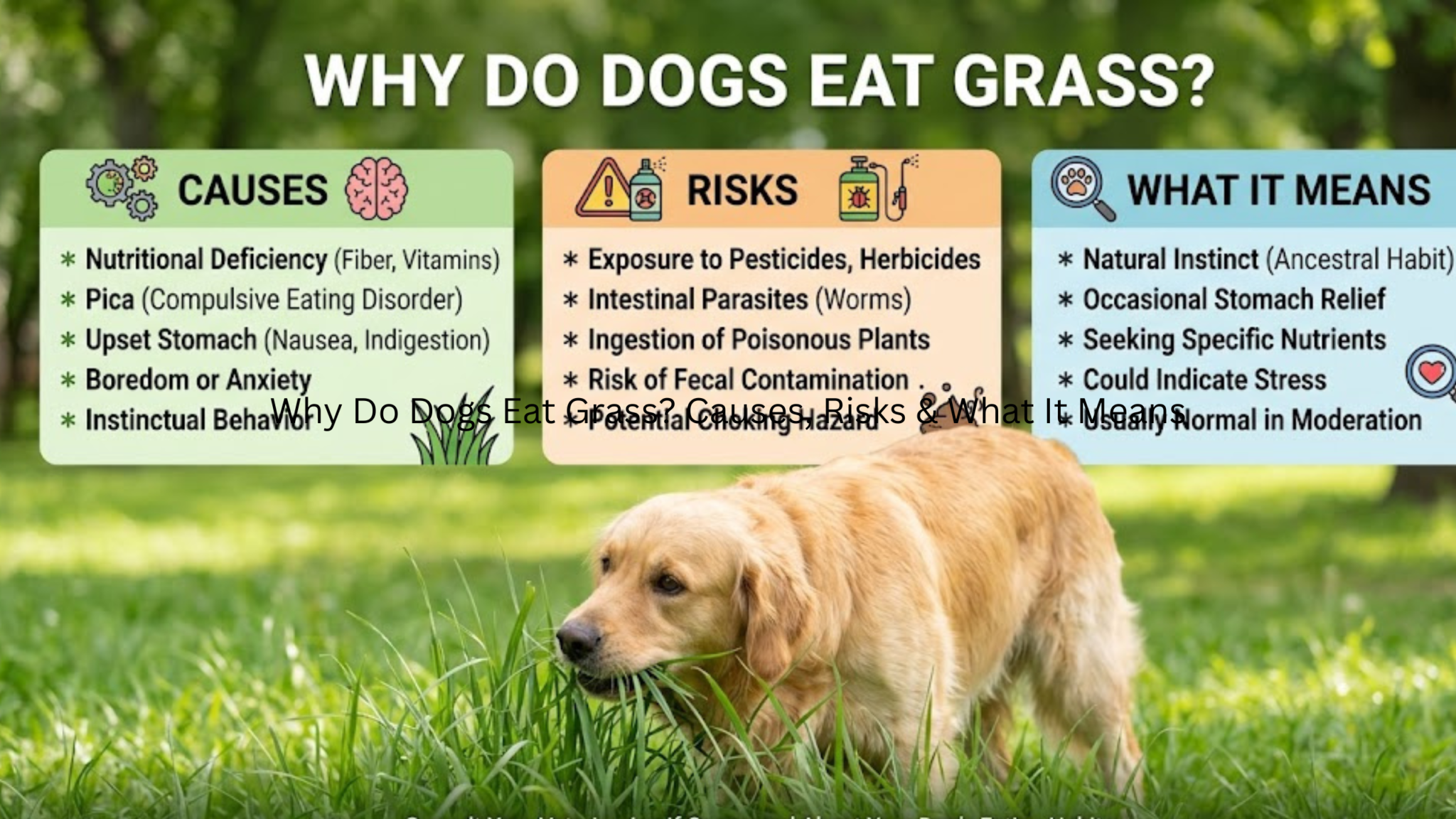

You’re out on a walk, your dog suddenly lowers its head, munches on a patch of grass, and acts like it’s enjoying a salad bar. If you’ve ever wondered why do dogs eat grass, you’re not alone. It’s one of the most common dog behaviors owners notice, and it often raises questions about digestion, illness, or missing nutrients.
The good news? In many cases, grass eating is normal. Dogs may nibble grass out of curiosity, boredom, instinct, or mild stomach discomfort. However, frequent grass eating, vomiting, or other unusual symptoms can sometimes point to a deeper issue. This guide explains the real reasons behind the habit and when you should pay attention.
Is It Normal for Dogs to Eat Grass?
Yes, for many dogs, eating grass is considered normal behavior. Veterinarians often see dogs that snack on grass occasionally without any health problems.
Dogs are natural scavengers and explorers. They investigate the world with their noses and mouths, so chewing plants can simply be part of how they interact with their environment.
Occasional grass eating is usually harmless if your dog is otherwise healthy, energetic, and eating normally.
Why Do Dogs Eat Grass: Common Reasons
There isn’t one single explanation. Instead, several possible causes may be behind the behavior.
1. Instinct From Wild Ancestors
Wild canines consumed plant matter indirectly when eating prey animals. Some researchers believe modern dogs may still have an instinct to chew vegetation from time to time.
Grass chewing could be a leftover natural behavior rather than a sign of sickness.
2. Mild Upset Stomach
Many owners ask why do dogs eat grass when sick or when their stomach hurts. Some dogs appear to seek grass when feeling nauseous, bloated, or uncomfortable.
Grass may irritate the stomach lining and trigger vomiting in some cases, which can make a dog feel temporarily better.
3. Boredom or Anxiety
Dogs left alone too long or lacking stimulation may develop habits like chewing grass, sticks, or other objects.
Signs boredom may be involved:
- Digging excessively
- Barking more than usual
- Chewing furniture
- Restless pacing
- Repetitive outdoor behaviors
4. They Like the Taste or Texture
Fresh grass can be moist, cool, and appealing. Some dogs simply enjoy chewing certain types of grass, especially new spring growth.
5. Dietary Fiber Needs
Some dogs may seek roughage if their diet is low in fiber. Extra fiber can help digestion and stool quality in certain cases.
If your dog eats grass often, talk with your vet about food quality and nutritional balance.
Why Do Dogs Eat Grass and Vomit?
One of the biggest concerns owners have is why do dogs eat grass and vomit afterward.
Sometimes dogs eat grass quickly, swallow long blades, and irritate their throat or stomach, which triggers vomiting. Other times, nausea existed first, and the dog chose grass because it already felt unwell.
Important note: most dogs that eat grass do not vomit afterward.
Occasional Vomiting May Happen If:
- They gulp grass rapidly
- They ate on an empty stomach
- They already had mild nausea
- Long blades irritated the stomach
See a Vet If Vomiting Includes:
- Blood
- Repeated episodes
- Lethargy
- Loss of appetite
- Diarrhea
- Pain or bloating
Why Do Dogs Eat Grass to Throw Up?
Many people assume dogs intentionally eat grass to vomit. While this can happen, science suggests it’s not always the main reason.
Studies indicate many dogs that eat grass show no signs of illness beforehand and don’t vomit afterward. That means grass eating is often behavioral or instinctive rather than a deliberate attempt to throw up.
So while some dogs may eat grass when nauseous, not all are doing it for that purpose.
Why Do Dogs Eat Grass All the Time?
If your dog suddenly starts grazing daily, it’s worth investigating.
Frequent grass eating may relate to:
- Chronic digestive discomfort
- Hunger between meals
- Stress or anxiety
- Low-fiber diet
- Learned habit
- Parasites or GI irritation
A sudden increase in grass eating deserves attention, especially if paired with vomiting, loose stool, weight loss, or appetite changes.
Why Do Dogs Eat Grass and Poop More?
Some dogs may pass grass in their stool or poop shortly after eating it. Grass contains fiber, which can stimulate bowel movement in certain dogs.
However, if grass eating comes with diarrhea, straining, mucus, or constipation, a digestive issue may be present.
Why Do Dogs Eat Grass and Weeds?
Dogs don’t always distinguish between lawn grass and weeds. They may chew whatever plants are available.
This matters because some weeds, flowers, fertilizers, and treated lawns can be toxic. Always supervise outdoor grazing and avoid areas sprayed with chemicals.
Scientific Reasons Dogs Eat Grass
If you’re curious about why do dogs eat grass scientific reasons, researchers commonly point to a combination of factors:
- Normal ancestral foraging behavior
- Curiosity and exploration
- Taste preference
- Fiber intake
- Mild nausea relief
- Behavioral enrichment needs
The current evidence suggests no single universal reason applies to every dog.
When Grass Eating Could Be a Problem
Occasional nibbling is usually fine. Contact your veterinarian if you notice:
- Daily obsessive grass eating
- Repeated vomiting
- Weight loss
- Appetite changes
- Diarrhea or constipation
- Lethargy
- Eating dirt, rocks, or non-food items
- Signs of pain
These symptoms may indicate digestive disease, parasites, dietary imbalance, or anxiety.
How to Reduce Grass Eating Safely
If you want your dog to stop grazing, try these practical steps:
Improve Daily Enrichment
- Longer walks
- Sniffing games
- Puzzle feeders
- Training sessions
- More playtime
Review Diet Quality
Ask your vet whether your dog needs:
- More fiber
- Different food formula
- Smaller frequent meals
- Sensitive-stomach food
Manage Outdoor Access
- Keep lawns chemical-free
- Remove toxic plants
- Redirect attention with treats or toys
FAQ: Why Do Dogs Eat Grass?
Why do dogs eat grass sometimes?
Usually from curiosity, boredom, taste preference, or mild stomach irritation. Occasional grass eating is common.
Why do dogs eat grass when their stomach is upset?
Some dogs may seek grass when nauseous. It can trigger vomiting or simply be a response to discomfort.
Why do dogs eat grass and then throw up?
The dog may already feel sick, or the grass may irritate the stomach and cause vomiting.
Why do dogs eat grass and dirt?
This can suggest boredom, nutritional issues, or a condition called pica. If frequent, speak with a vet.
Should I stop my dog from eating grass?
Occasional untreated grass is often harmless, but prevent access to sprayed lawns, toxic plants, or compulsive grazing.
Google why do dogs eat grass — what’s the short answer?
Because dogs may enjoy it, feel mildly sick, seek fiber, or act on instinct. It’s often normal unless frequent or paired with symptoms.
Conclusion
So, why do dogs eat grass? Usually, it’s a normal canine habit linked to instinct, curiosity, taste, boredom, or mild digestive discomfort. Most of the time it isn’t serious. But if your dog eats grass constantly, vomits often, or shows other symptoms, it’s best to get professional advice.
Pay attention to patterns, support your dog with a balanced diet and enough stimulation, and monitor any sudden behavior changes. Understanding the reason behind grass eating helps you keep your dog healthier and happier.