
If you want a stronger back, better posture, and more upper-body pulling power, the bent over dumbbell row should be in your training routine. This classic movement builds muscle across the upper and mid-back while also challenging your core and grip strength.
Simple to learn and easy to perform at home or in the gym, this exercise works for beginners and advanced lifters alike. In this guide, you’ll learn proper technique, common mistakes, muscles targeted, and the best ways to use it in your workouts.
What Is the Bent Over Dumbbell Row?
The bent over dumbbell row is a resistance exercise where you hinge forward at the hips and pull dumbbells toward your torso. The body stays in a bent-over position while the arms perform a rowing motion.
This setup trains multiple muscles at once, making it one of the most efficient upper-body movements available.
Why It’s So Effective
- Builds back thickness and strength
- Improves posture
- Trains grip and forearms
- Engages the core
- Helps balance pressing exercises
- Requires only dumbbells
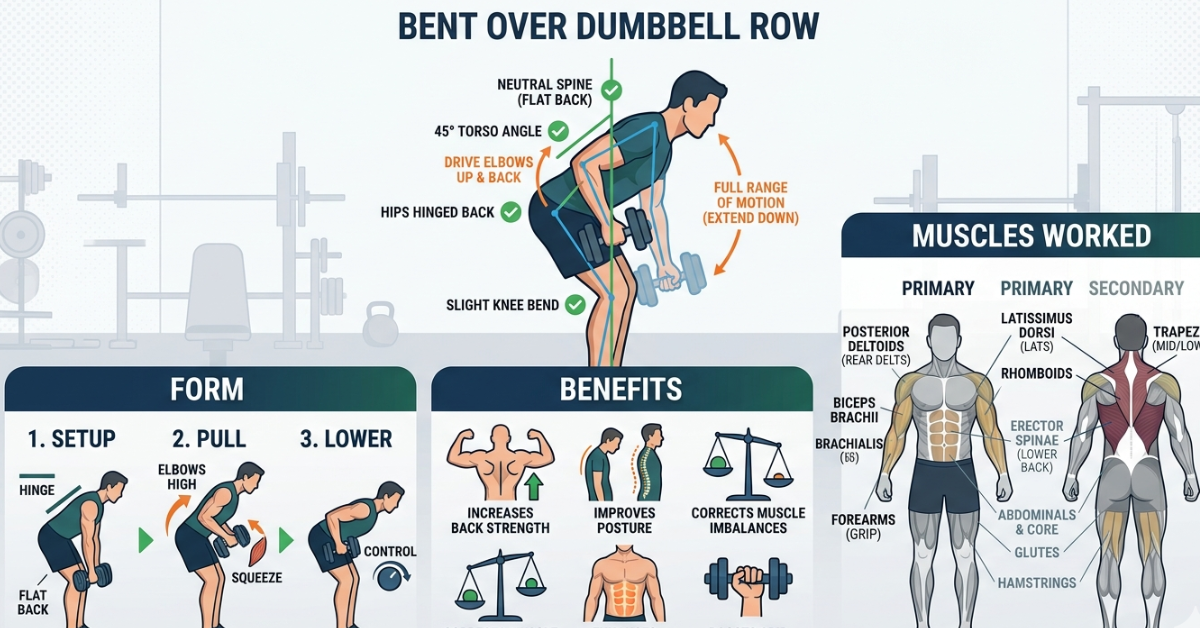
Bent Over Dumbbell Row Muscles Worked
One of the biggest reasons people love this movement is how many muscles it targets.
Primary Muscles
- Latissimus dorsi (lats)
- Rhomboids
- Trapezius
- Rear deltoids
Secondary Muscles
- Biceps
- Forearms
- Core muscles
- Lower back stabilizers
- Hamstrings (isometric support)
The result is a stronger and more athletic upper body with better posture.
How to Do Bent Over Dumbbell Row Form Correctly
Proper technique matters more than lifting heavy. Use this step-by-step method.
Bent Over Dumbbell Row Proper Form
- Stand with feet hip-width apart.
- Hold a dumbbell in each hand.
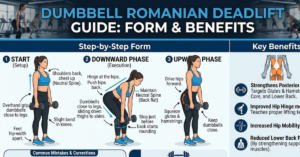
- Hinge at the hips until your torso is around 45–75 degrees forward.
- Keep your back flat and chest open.
- Let the weights hang below your shoulders.
- Pull elbows upward and back toward your hips.
- Squeeze shoulder blades together at the top.
- Lower slowly with control.
- Repeat for your target reps.
Key Coaching Cues
- Keep the spine neutral
- Brace your core
- Pull with elbows, not hands
- Avoid jerking the weight
- Move through full range of motion
Common Bent Over Dumbbell Row Mistakes
Even a great exercise can lose effectiveness with poor form.
1. Rounding the Lower Back
This can increase strain and reduce power output. Keep the chest up and spine neutral.
2. Using Momentum
Swinging the torso turns it into a sloppy lift. Use controlled reps.
3. Standing Too Upright
If you’re nearly vertical, the movement changes and back activation drops.
4. Shrugging the Shoulders
Focus on pulling elbows back rather than lifting shoulders upward.
5. Going Too Heavy
Heavy weights are useless if form breaks down.
Bent Over Dumbbell Row Variations
Changing your setup can target muscles differently or make the exercise easier on joints.
Bent Over Dumbbell Row Both Arms
Use two dumbbells at once. Great for efficiency and balanced loading.
Single Arm Bent Over Dumbbell Row
Train one side at a time while supporting yourself on a bench or rack.
Bent Over Dumbbell Row Bench Variation
Place one knee and hand on a bench for added stability and reduced lower-back fatigue.
Standing Bent Over Dumbbell Row
Done unsupported while hinged forward. Great for extra core engagement.
Bent Over Dumbbell Row for Women
This exercise is excellent for anyone, including those looking to tone the upper body and improve posture. The bent over dumbbell row woman search trend often comes from people wanting a beginner-friendly back exercise—and this movement fits perfectly.
Benefits for women include:
- Stronger upper back
- Better shoulder posture
- Improved arm definition
- Support for daily lifting tasks
- Better confidence with strength training
Bent Over Dumbbell Row at Home
No gym? No problem. This move works extremely well in home workouts.
All you need:
- Pair of dumbbells
- Adjustable weights or resistance substitutes
- Enough floor space to hinge safely
You can even use water jugs or loaded backpacks if dumbbells aren’t available.
Bent Over Dumbbell Row Alternative Exercises
Need variety or limited by equipment? Try these options:
- Resistance band row
- Seated cable row
- Inverted row
- Barbell row
- Chest-supported row
- T-bar row
These alternatives train similar pulling patterns.
How Many Sets and Reps Should You Do?
Your goal determines volume.
Muscle Growth
- 3–4 sets of 8–12 reps
Strength
- 4–5 sets of 5–8 reps
Endurance
- 2–3 sets of 15+ reps
Train rows 1–3 times weekly depending on your program.
Bent Over Dumbbell Row Exercise Tips for Better Results
- Pause at the top for one second
- Lower slowly to increase tension
- Keep wrists neutral
- Use straps only if grip limits progress
- Progress weight gradually over time
Consistency beats ego lifting every time.
FAQs About Bent Over Dumbbell Row
What muscles does the bent over dumbbell row work?
It mainly targets the lats, rhomboids, traps, rear delts, biceps, and core stabilizers.
Is bent over dumbbell row good for beginners?
Yes. It’s beginner-friendly when performed with light weights and proper technique.
Should elbows stay close or wide?
A closer elbow path emphasizes lats, while a wider path can involve more upper back and rear delts.
Can I do bent over dumbbell row every day?
Daily heavy rowing isn’t ideal. Most people recover best with 2–3 weekly sessions.
Is one-arm or two-arm better?
Both are effective. One-arm rows help fix imbalances, while two-arm rows save time.
What if I feel lower-back strain?
Reduce weight, improve your hinge position, brace your core, or use a bench-supported version.Conclusion
The bent over dumbbell row is one of the most effective exercises for building a stronger, thicker, and healthier back. It trains multiple muscle groups, improves posture, and fits nearly any training plan.
Focus on clean form, controlled reps, and steady progression. Whether you train in a gym or do the bent over dumbbell row at home, this movement can deliver serious results. Add it to your next workout and feel the difference in your strength and posture.