
If traditional workouts feel too rigid or overwhelming, somatic yoga might be exactly what your body needs. This gentle, mindful practice focuses less on how a pose looks and more on how it feels from the inside.
In simple terms, what is somatic yoga? It’s a body-centered approach to movement that helps release tension, improve awareness, and reconnect you with your nervous system. Whether you’re dealing with stress, chronic pain, or just looking for a calmer way to move, this practice offers a refreshing alternative to high-intensity fitness routines.
What Is Somatic Yoga?
At its core, somatic yoga blends traditional yoga with principles from somatic therapy—a field that studies how the body stores stress and trauma.
Instead of pushing into deep stretches, you move slowly and consciously. The focus is on sensing internal feedback rather than achieving perfect alignment.
Key Characteristics
- Slow, controlled movements
- Emphasis on internal awareness (interoception)
- Nervous system regulation
- Gentle release of chronic muscle tension
This makes somatic yoga therapy especially appealing for those recovering from injury, burnout, or emotional stress.
Benefits of Somatic Yoga
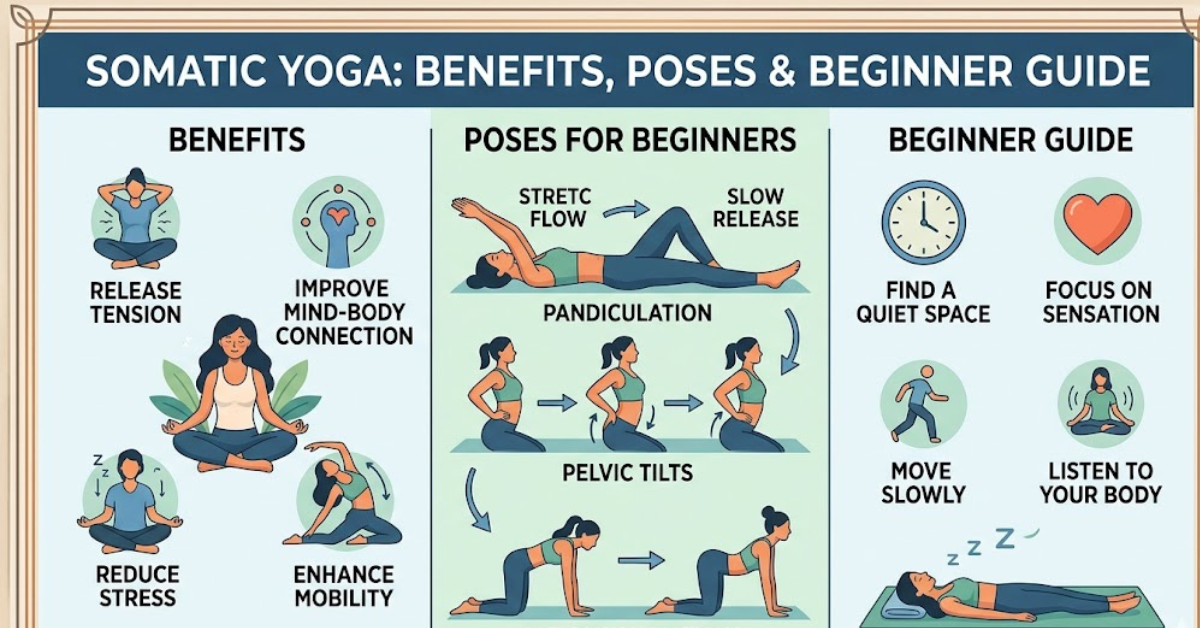
The benefits of somatic yoga go far beyond flexibility. It’s a full mind-body reset.
Physical Benefits
- Relieves chronic pain and stiffness
- Improves posture and mobility
- Enhances muscle coordination
Mental & Emotional Benefits
- Reduces stress and anxiety
- Supports emotional healing
- Improves sleep quality
Nervous System Support
- Activates the parasympathetic (rest-and-digest) system
- Helps regulate fight-or-flight responses
Many people wonder, does somatic yoga work? The answer is yes—for those who stay consistent. It’s subtle but powerful over time.
Somatic Yoga for Beginners
If you’re new, don’t worry—somatic yoga for beginners is very accessible.
How to Start
- Begin with 10–15 minutes daily
- Focus on slow, mindful movements
- Pay attention to sensations rather than performance
- Practice in a quiet, distraction-free space
You don’t need flexibility or prior yoga experience. In fact, beginners often benefit the most.
Simple Somatic Yoga Exercises to Try
Here are a few beginner-friendly somatic yoga exercises you can do at home:
1. Pelvic Tilts
- Lie on your back
- Gently tilt your pelvis forward and backward
- Move slowly and notice subtle sensations
2. Shoulder Rolls
- Sit or stand comfortably
- Roll shoulders slowly in circles
- Focus on releasing tension
3. Neck Release
- Gently tilt your head side to side
- Avoid forcing the stretch
These movements may look simple, but they’re deeply effective.
Common Somatic Yoga Poses
Unlike traditional yoga, somatic yoga poses are less about holding positions and more about how you move through them.
Some commonly used positions include:
- Constructive rest pose
- Cat-cow (done slowly with awareness)
- Gentle spinal twists
- Supported child’s pose
The goal is to re-educate your muscles, not push their limits.
Somatic Yoga for Trauma and Healing
One of the most powerful uses of this practice is somatic yoga for trauma.
Trauma often gets stored in the body, leading to tension, fatigue, or emotional overwhelm. Somatic movement helps release this stored energy safely.
Why It Helps
- Encourages body awareness without overwhelm
- Builds a sense of safety in the body
- Allows gradual emotional release
This is why many therapists integrate somatic practices into healing programs.
Can Somatic Yoga Help with Weight Loss?
While it’s not a high-calorie-burning workout, somatic yoga for weight loss can still be effective indirectly.
How It Supports Weight Loss
- Reduces stress-related eating
- Improves hormonal balance
- Encourages mindful habits
Think of it as a supportive tool rather than a primary fat-burning exercise.
Morning Somatic Yoga Routine
A short morning somatic yoga routine can set the tone for your entire day.
Quick 10-Minute Flow
- Gentle stretching in bed
- Slow spinal movements
- Deep breathing exercises
- Light joint mobility
It wakes up your body without shocking your system.
Finding Classes, Apps, and Programs
If you’re searching for somatic yoga near me, look for studios offering:
- Therapeutic yoga
- Trauma-informed classes
- Mind-body movement sessions
Digital Options
- Apps and online platforms often offer free somatic yoga sessions
- Some programs provide structured learning paths
- Look for the best somatic yoga app with guided audio and slow-paced instruction
If you’re serious about teaching, consider a somatic yoga certification program to deepen your knowledge.
Choosing the Best Somatic Yoga Program
Not all programs are created equal. The best somatic yoga program should include:
- Clear instruction on body awareness
- Science-backed techniques
- Progressive learning structure
- Access to guided sessions
You may also come across rh somatic yoga reviews, which can help you compare different approaches and teaching styles.
FAQs
What is somatic yoga in simple terms?
It’s a gentle movement practice that focuses on internal awareness to release tension and improve how your body feels.
Does somatic yoga work for chronic pain?
Yes, many people report reduced pain through consistent practice, especially for back, neck, and joint issues.
Can I do somatic yoga at home?
Absolutely. Many free somatic yoga videos and programs are available online.
How often should I practice?
Start with 3–4 times per week, even for just 10–20 minutes.
Is somatic yoga suitable for beginners?
Yes, somatic yoga for beginners is one of the easiest entry points into mindful movement.
Are there certifications available?
Yes, you can pursue a somatic yoga certification if you want to teach or deepen your expertise.
Conclusion
Somatic yoga isn’t about pushing harder—it’s about listening better. By slowing down and tuning into your body, you can unlock a surprising level of healing, relaxation, and awareness.
Whether you’re exploring somatic yoga exercises, looking for somatic yoga classes, or simply curious about how it works, the key is consistency and patience.
Start small. Stay curious. And let your body guide the process.
If you’re ready to go deeper, consider trying a structured program or building a daily routine—you might be surprised by how much changes when you finally move with awareness.