
If your chest workouts feel stuck, the incline dumbbell press might be the missing piece. This powerful upper-body exercise targets the upper chest, shoulders, and triceps while improving pressing strength and muscle balance. It’s a staple movement in almost every serious gym routine—and for good reason.
Unlike flat pressing variations, the incline version changes the pressing path and emphasizes the clavicular head of the chest. In this guide, you’ll learn proper technique, ideal bench setup, muscles worked, common mistakes, and how to get the most from every rep.
What Is the Incline Dumbbell Press?
The incline dumbbell press is a resistance exercise performed on an adjustable bench set at an upward angle. Instead of using a barbell, you press a dumbbell in each hand from chest level to full extension.
Because each arm works independently, it helps correct muscular imbalances, improves coordination, and allows a greater range of motion than many machine-based chest presses.
It’s one of the best exercises for building a fuller-looking upper chest.
What Does Incline Dumbbell Press Work?
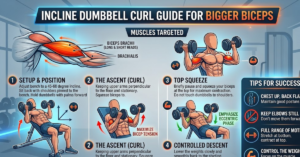
Many people ask, what does incline dumbbell press work? The answer includes several major upper-body muscles.
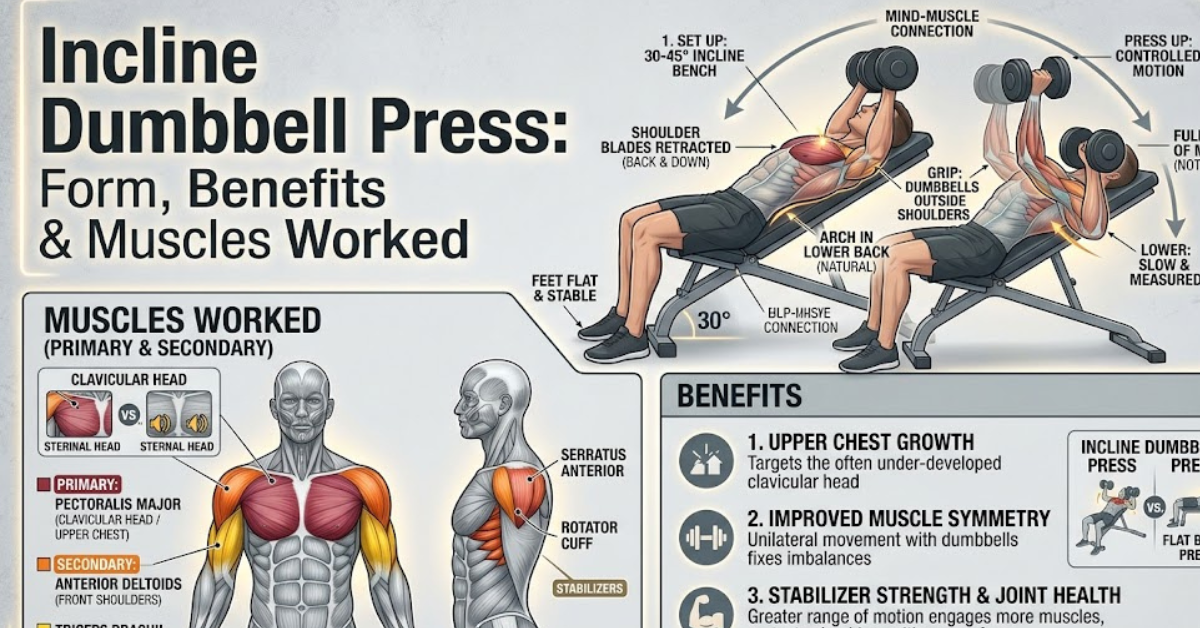
Primary Muscles Worked
- Upper chest (clavicular pectoralis major)
- Anterior deltoids (front shoulders)
- Triceps brachii
Secondary Muscles Worked
- Serratus anterior
- Rotator cuff stabilizers
- Core muscles for balance
This makes the movement excellent for both size and functional pressing strength.
Incline Dumbbell Press Muscles Worked: Why Upper Chest Matters
The upper chest often gets neglected in standard flat pressing routines. Training it consistently can help:
- Create a fuller chest appearance
- Improve pressing strength carryover
- Build shoulder stability
- Enhance posture and upper-body symmetry
If your chest looks flat near the collarbone area, adding this exercise regularly can help.
Best Incline Dumbbell Press Angle
The incline dumbbell press angle plays a huge role in muscle activation.
Recommended Bench Angles
- 15 to 30 degrees: Best for upper chest focus
- 30 to 45 degrees: Balanced chest and shoulder involvement
- Above 45 degrees: More front delt dominant
For most lifters, a 30-degree incline is the sweet spot. It targets the chest without turning the exercise into a shoulder press.
How to Do Incline Dumbbell Press Correctly
Mastering technique matters more than lifting heavy.
Incline Dumbbell Press Form Step-by-Step
- Adjust bench to 30–45 degrees.
- Sit down with dumbbells resting on thighs.
- Kick weights up as you lie back.
- Keep feet planted firmly on the floor.
- Retract shoulder blades and keep chest up.
- Lower dumbbells slowly to upper chest level.
- Press upward in a slight arc until arms extend.
- Stop just before locking elbows aggressively.
- Repeat with control.
Key Form Tips
- Wrists stacked over elbows
- Elbows slightly tucked, not flared wide
- Controlled lowering phase
- Neutral spine position
- Avoid bouncing weights at bottom
Good incline dumbbell press form protects shoulders and maximizes chest tension.
Common Mistakes to Avoid
Even experienced lifters make these errors.
1. Bench Too High
A steep bench shifts tension into shoulders.
2. Using Momentum
Throwing weights up reduces chest activation.
3. Partial Range of Motion
Lower the dumbbells enough to stretch the chest safely.
4. Uneven Pressing
If one side rises faster, reduce weight and regain control.
5. Excessive Arching
Keep a natural arch, not exaggerated lower-back strain.
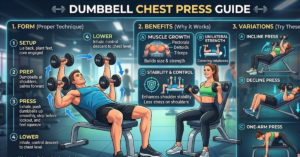
Incline Dumbbell Press vs Flat Dumbbell Press
Both exercises are valuable, but they train the chest differently.
| Exercise | Main Focus | Best For |
| Incline Press | Upper chest | Balanced chest development |
| Flat Press | Mid/lower chest | Overall pressing strength |
| Decline Press | Lower chest | Lower chest emphasis |
For complete chest growth, rotate all pressing angles.
Incline Dumbbell Press Alternative Options
Need variety or limited by equipment? Try these:
Best Alternatives
- Incline barbell press
- Smith machine incline press
- Incline chest press machine
- Push-ups with feet elevated
- Resistance band incline press
- Cable incline press
Each option can mimic the pressing angle while changing resistance demands.
Incline Dumbbell Press Bench Setup Tips
The right incline dumbbell press bench setup improves safety and performance.
- Ensure bench is locked securely
- Choose a stable bench with back support
- Keep feet flat throughout the set
- Position eyes slightly below dumbbells at start
If your gym bench wobbles, choose another one.
How Much Weight Should You Use?
Choose a weight that allows clean reps.
General Starting Point
- Beginners: 8–12 controlled reps
- Intermediate: moderate-heavy for 6–10 reps
- Advanced: cycles of heavy and hypertrophy ranges
Always prioritize technique over ego lifting.
Best Rep Ranges for Your Goal
Muscle Growth
3–4 sets of 8–12 reps
Strength
4–5 sets of 4–6 reps
Endurance
2–3 sets of 15+ reps
Where to Place It in Your Workout
Use it early in your chest or push day when energy is highest.
Example Push Day
- Incline dumbbell press
- Flat press
- Shoulder press
- Chest flyes
- Triceps extensions
This lets you attack upper chest while fresh.
Can Beginners Do This Exercise?
Absolutely. It’s beginner-friendly because dumbbells allow a natural arm path and balanced development.
Start light, learn control, and progress gradually.
Incline Dumbbell Press Tutorial Notes for Better Results
If you’re looking for an incline dumbbell press tutorial, focus on these fundamentals:
- Smooth lowering phase
- Strong chest stretch at bottom
- Powerful but controlled press upward
- Consistent bench angle
- Progressive overload over time
Small improvements in technique create big long-term gains.
FAQs
Is incline dumbbell press better than flat bench?
Not better—just different. It emphasizes the upper chest more, while flat pressing develops overall chest mass.
How often should I do incline dumbbell press?
1–2 times weekly works well for most lifters depending on recovery and training volume.
What angle is best for upper chest?
Around 30 degrees is ideal for many people.
Why do I feel it in my shoulders?
Your bench may be too steep, elbows may flare too much, or shoulder blades aren’t retracted.
Can I build chest with only dumbbells?
Yes. Dumbbells can build excellent chest size and strength when progressively overloaded.
Is incline dumbbell press safe?
Yes, when done with proper form and manageable weight.
Conclusion
The incline dumbbell press is one of the smartest exercises for developing upper chest size, stronger pressing mechanics, and balanced muscle growth. With the right bench angle, controlled reps, and consistent progression, it can transform your chest training.
If you want a more complete physique and stronger push workouts, add this movement to your routine now—and focus on perfect form before chasing heavier weights.