
If you’re looking to build stronger legs and sculpt your lower body, sumo squats deserve a spot in your routine. This wide-stance squat variation isn’t just a trendy gym move—it’s one of the most effective exercises for targeting your inner thighs and glutes.
In this guide, we’ll break down what sumo squats work, how to perform them correctly, and why they’re a powerful addition to any workout plan. Whether you’re a beginner or lifting heavy, you’ll find practical tips to get the most out of every rep.
What Are Sumo Squats?
At their core, sumo squats are a squat variation performed with a wider-than-shoulder stance and toes pointed outward. This position shifts more emphasis to the inner thighs and glutes compared to standard squats.
Unlike traditional squats, your torso stays more upright, and your hips open up more during the movement—making them especially effective for improving lower-body strength and mobility.
What Muscles Do Sumo Squats Work?
One of the most common questions is: what muscles do sumo squats work? The answer is—quite a few.
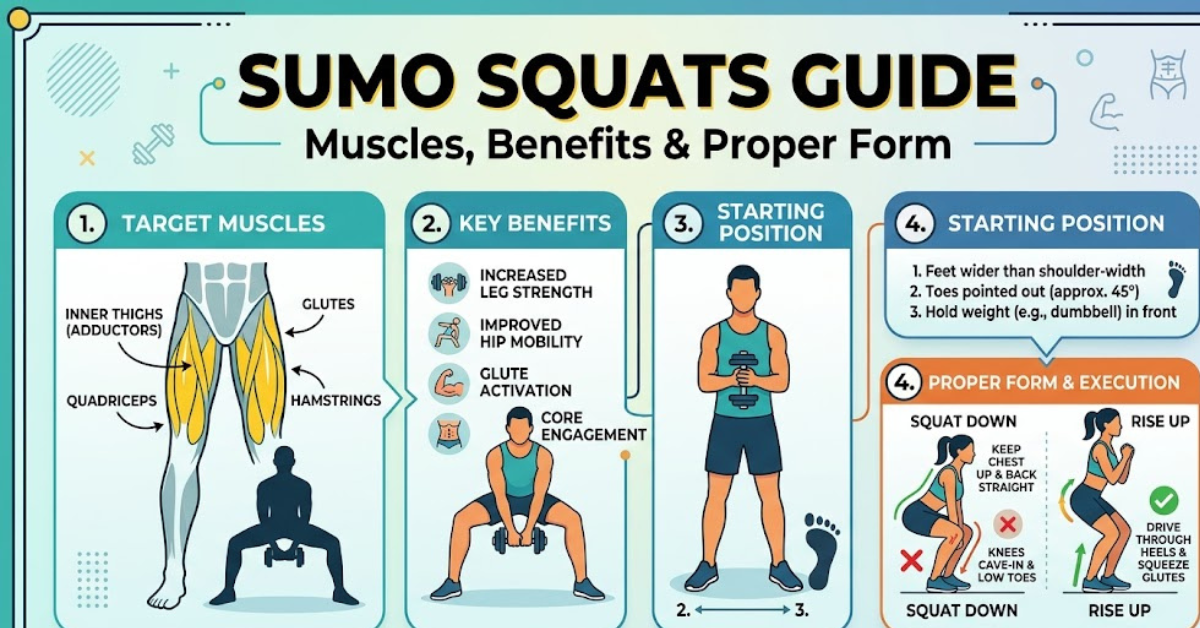
Primary Muscles Targeted
- Glutes (especially the gluteus maximus)
- Inner thighs (adductors)
- Quadriceps
Secondary Muscles
- Hamstrings
- Core (for stability)
- Calves
If your goal is sumo squats for glutes, you’re in luck—this exercise places significant tension on the glutes due to the wider stance and hip positioning.
Sumo Squats Benefits
Adding sumo squats to your routine comes with several advantages:
1. Stronger Glutes and Inner Thighs
The wide stance directly targets areas that regular squats may miss.
2. Improved Hip Mobility
The outward foot position encourages better hip flexibility over time.
3. Reduced Lower Back Stress
Compared to some squat variations, sumo squats can feel more comfortable on the lower back.
4. Better Balance and Stability
Your core works harder to keep you stable, especially with added weight.
5. Versatile for All Fitness Levels
You can perform them with bodyweight, dumbbells, or kettlebells.
How to Do Sumo Squats (Step-by-Step)
Mastering proper form is key. Here’s how to do sumo squats correctly:
- Stand with feet wider than shoulder-width apart
- Point your toes outward at about 30–45 degrees
- Keep your chest up and core engaged
- Lower your hips down by bending your knees
- Push your knees outward as you descend
- Go as low as comfortable while maintaining form
- Drive through your heels to return to standing
Pro Tip: Keep your weight in your heels—not your toes—to maximize glute activation.
Variations: Add Intensity to Your Workout
Dumbbell Sumo Squats
Hold a weight vertically between your legs.
- Great for beginners
- Easy to control
- Ideal for learning form
Sumo Squats with Dumbbells
You can also hold dumbbells at your sides for added resistance.
Sumo Squats with Kettlebell
This variation improves grip strength and coordination while working your lower body.
Sumo Squats vs Regular Squats
When comparing sumo squats vs regular squats, the main difference lies in stance and muscle focus.
| Feature | Sumo Squats | Regular Squats |
| Stance | Wide | Shoulder-width |
| Target | Inner thighs, glutes | Quads, glutes |
| Torso | More upright | Slight forward lean |
If you’re wondering what do sumo squats target, think inner thighs and glutes more than anything else.
Sumo Squats vs Goblet Squats
The debate around sumo squats vs goblet squats often comes down to goals.
- Sumo squats: Better for inner thighs and hip mobility
- Goblet squats: Better for overall squat form and quad strength
Both are excellent—use them together for a balanced lower-body routine.
Do Sumo Squats Work Glutes?
Absolutely. A common question is: do sumo squats work glutes? Yes—and very effectively.
The wide stance increases hip external rotation, which places more emphasis on the glutes. To maximize results:
- Go deep into the squat
- Squeeze your glutes at the top
- Add resistance over time
Common Mistakes to Avoid
Even a great exercise can lose effectiveness with poor form. Watch out for:
- Letting knees cave inward
- Leaning too far forward
- Not going deep enough
- Rushing through reps
Focus on control and proper alignment for the best results.
FAQs About Sumo Squats
1. What do sumo squats work the most?
They primarily target the glutes and inner thighs, with secondary activation in the quads and core.
2. Are sumo squats better than regular squats?
Not necessarily better—just different. Each targets muscles differently, so both have value.
3. Can beginners do sumo squats?
Yes, they’re beginner-friendly and can be done without weights.
4. How many reps should I do?
Start with 10–15 reps for 2–3 sets, depending on your fitness level.
5. Are dumbbell sumo squats effective?
Yes, adding weight increases resistance and helps build strength faster.
Conclusion
Sumo squats are more than just a variation—they’re a powerful tool for building lower-body strength, improving mobility, and targeting muscles that often get overlooked. Whether you’re doing bodyweight reps or progressing to sumo squats with dumbbells, the key is consistency and proper form.
If your goal is stronger glutes, toned thighs, and better overall stability, this exercise belongs in your routine. Start simple, focus on technique, and gradually increase intensity—you’ll feel the difference in no time.