
Walk into any gym and you’ll hear the same debate: cardio before or after weights? It’s one of the most common questions in fitness—and honestly, the answer isn’t as one-size-fits-all as people think.
Some swear by running first to “burn fat,” while others insist lifting weights should come first for maximum strength. So what’s actually better?
In this guide, we’ll break down the science, clear up the confusion, and help you decide what works best for your goals—whether that’s fat loss, muscle gain, or overall fitness.
Cardio Before or After Weights: What’s the Difference?
At its core, this question comes down to energy and performance.
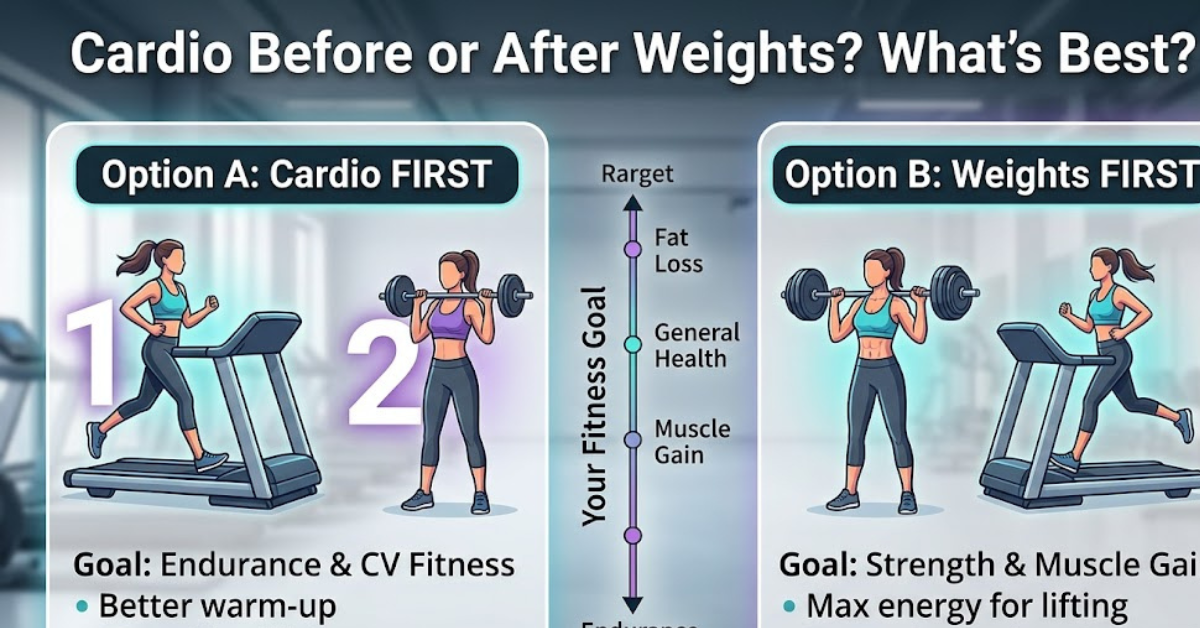
- Cardio first uses up your energy stores early
- Weights first prioritizes strength and muscle performance
Your body can only give its best effort once. So whichever you do first typically gets your highest intensity and focus.
Should You Do Cardio Before or After Weights?
The real answer depends on your primary goal. Let’s break it down clearly.
If Your Goal Is Fat Loss
When it comes to cardio before or after weights for fat loss, lifting first usually wins.
Why?
- Strength training depletes glycogen (stored energy)
- This may encourage your body to rely more on fat during cardio
- You maintain higher intensity during weight training
Best approach:
- Start with weights
- Follow with moderate cardio (20–30 minutes)
If Your Goal Is Muscle Gain
If you’re asking, “cardio before or after weights for muscle gain?”—the answer is simple: weights first, always.
Here’s why:
- Muscle growth depends on lifting heavy and with proper form
- Cardio beforehand can reduce strength and endurance
- You risk compromising your workout quality
Tip: Keep cardio light or do it on separate days if muscle gain is your top priority.
If Your Goal Is Endurance
If you’re training for a race or athletic performance, doing cardio before weights can make sense.
Why?
- Your priority is cardiovascular performance
- You want fresh legs for running, cycling, or swimming
That said, your strength workout may feel harder afterward—and that’s okay if endurance is your focus.
Is It Better to Do Cardio Before or After Weights?
Let’s simplify things with a quick comparison:
Cardio Before Weights Benefits
- Improves endurance performance
- Helps warm up the body
- Good for athletes focused on stamina
Cardio After Weights Benefits
- Supports fat loss more effectively
- Preserves strength and muscle performance
- Helps maximize calorie burn post-workout
For most people, especially beginners and those aiming to lose weight, cardio after weights is generally the better choice.
Cardio Before or After Weights for Weight Loss
If your goal is shedding kilos, you’ve probably wondered:
“Should I do cardio before or after weights to lose weight?”
Here’s the truth:
- Total calorie burn matters most
- Consistency beats timing
- But… order can still give you an edge
Best strategy for weight loss:
- Lift weights first (30–45 minutes)
- Add cardio after (15–30 minutes)
- Maintain a calorie deficit through diet
This combination helps preserve muscle while maximizing fat burn.
What Science Says About Workout Order
Research shows that doing strength training first:
- Improves overall strength gains
- Leads to better muscle development
- Doesn’t reduce fat loss results
On the flip side, intense cardio before lifting can:
- Reduce power output
- Decrease lifting performance
- Increase fatigue
So if you’re wondering, “is it best to do cardio before or after weights?”—science leans toward weights first for most goals.
How to Structure Your Workout (Simple Plan)
Here’s a practical routine you can follow:
Option 1: Fat Loss Focus
- Warm-up (5–10 minutes light cardio)
- Weight training (30–45 minutes)
- Cardio (20–30 minutes moderate intensity)
Option 2: Muscle Gain Focus
- Warm-up
- Weight training (heavy focus)
- Optional light cardio (10–15 minutes)
Option 3: Endurance Focus
- Cardio session (main workout)
- Light strength training afterward
Common Mistakes to Avoid
- Doing too much cardio before lifting → drains energy
- Skipping weights altogether → slows fat loss long-term
- Not aligning workouts with goals → leads to frustration
- Overtraining both cardio and weights → increases injury risk
Balance is everything.
FAQs
1. Should I do cardio before or after weights for fat loss?
For fat loss, it’s generally better to lift weights first and do cardio afterward to maximize calorie burn and preserve muscle.
2. Is cardio before or after weights better for beginners?
Beginners should usually start with weights, then add cardio. It builds strength and creates a solid fitness foundation.
3. Can I split cardio and weights into separate sessions?
Yes—and it’s actually ideal if you have the time. Morning cardio and evening weights can improve performance in both.
4. Do you do cardio before or after weights if you’re short on time?
Prioritize weights first, then finish with a short cardio session. Even 10–15 minutes helps.
5. Are you supposed to do cardio before or after weights every day?
Not necessarily. You can alternate days or adjust based on your energy levels and goals.
Conclusion
So, what’s better: cardio before or after weights?
For most people, doing weights first and cardio after is the smartest approach—especially for fat loss, muscle gain, and overall fitness.
But here’s the bigger picture: the best routine is the one you can stick to consistently. Your goals, schedule, and preferences matter more than perfect timing.
If you’re still unsure, start with weights first, add cardio after, and adjust based on how your body responds. Fitness isn’t about rigid rules—it’s about finding what works and building from there.
Now that you’ve got clarity, the next step is simple: get moving and stay consistent.