
Want stronger shoulders, better upper-body balance, and a more athletic look? The dumbbell shoulder press is one of the most effective exercises for building shoulder strength and size while improving stability. Unlike machine presses, dumbbells force each arm to work independently, helping correct imbalances and improve control.
Whether you’re training at home or in the gym, this movement deserves a spot in your routine. In this guide, you’ll learn proper technique, common mistakes, muscles worked, and how to choose between seated and standing variations.
What Is the Dumbbell Shoulder Press?
The dumbbell shoulder press is an upper-body pressing movement where you raise a pair of dumbbells from shoulder level to overhead. As a result, it targets the shoulders while also engaging the triceps and upper chest. Since the weights travel above your head, many people also call it the overhead dumbbell shoulder press.
This exercise is popular because it:
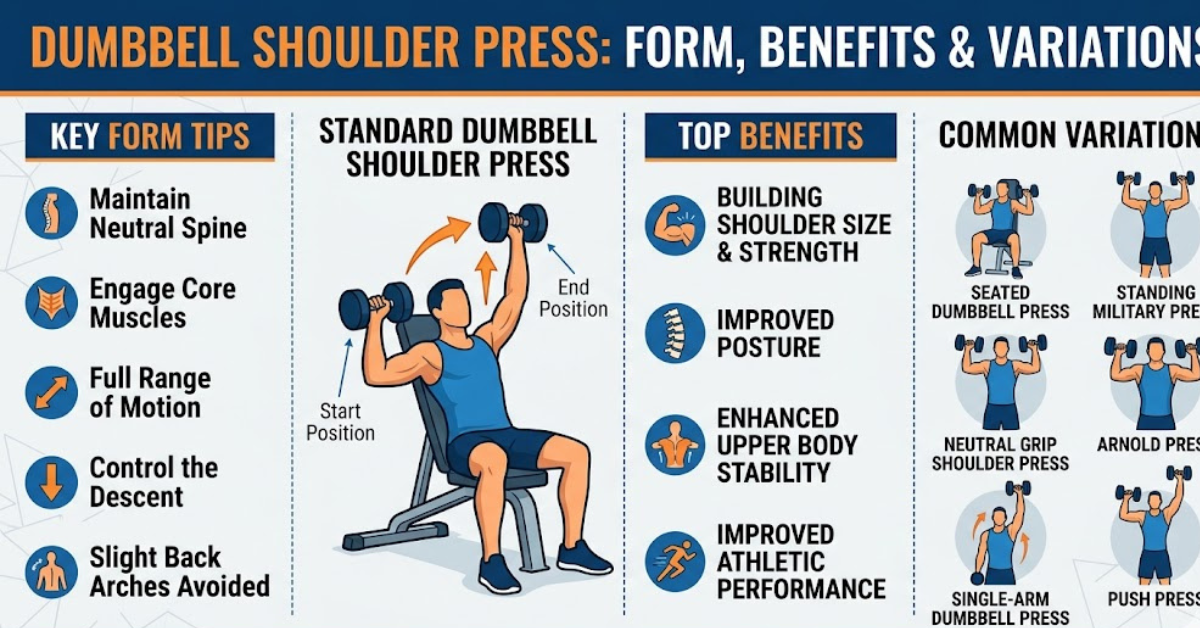
- Builds shoulder size and strength
- Improves pressing power
- Trains both sides evenly
- Enhances shoulder stability
- Requires minimal equipment
Dumbbell Shoulder Press Muscles Worked
One reason this movement is so effective is that it trains multiple muscle groups at once.
Primary Muscles
- Deltoids (front and side shoulders)
- Triceps
- Upper chest
Secondary Muscles
- Core muscles
- Upper traps
- Rotator cuff stabilizers
- Serratus anterior
Because stabilizer muscles are involved, dumbbells often feel more challenging than a barbell. Therefore, they can be excellent for balanced strength development.
How to Do the Dumbbell Shoulder Press Correctly
Perfect dumbbell shoulder press form matters. After all, proper technique protects your joints and helps you lift efficiently.
Step-by-Step Instructions
- Hold a dumbbell in each hand at shoulder height.
- Position your palms facing forward or slightly angled inward.
- Brace your core and keep your chest lifted.
- Next, press the weights overhead until arms are nearly straight.
- Then lower slowly back to the starting position.
- Continue for the desired reps.
Form Tips
- Keep wrists neutral, not bent backward
- Avoid arching your lower back
- Move in a controlled path
- Don’t slam weights together overhead
- Keep elbows slightly in front of shoulders
Seated Dumbbell Shoulder Press vs Standing Dumbbell Shoulder Press
Both versions are effective. However, each has unique benefits.
Seated Dumbbell Shoulder Press
The seated dumbbell shoulder press is ideal for focusing directly on the shoulders with less lower-body involvement.
Benefits
- Better isolation of deltoids
- Easier to maintain posture
- Good for beginners
- Great for hypertrophy training
Using a bench with back support can help maintain alignment during the seated dumbbell shoulder press exercise.
Standing Dumbbell Shoulder Press
The standing dumbbell shoulder press requires more balance and core activation.
Benefits
- Builds full-body stability
- Improves athletic coordination
- Engages abs and glutes
- Functional strength carryover
In addition, this standing version is excellent for sports performance and general fitness.
Common Mistakes to Avoid
Even strong lifters often perform this exercise poorly. So, watch out for these errors:
1. Excessive Back Arch
Too much arching shifts stress to the lower back instead of shoulders.
2. Using Too Much Weight
Heavy dumbbells often lead to sloppy reps and reduced range of motion.
3. Flaring Elbows Too Wide
That position can irritate shoulder joints over time.
4. Rushing the Lowering Phase
Lowering slowly builds control and muscle tension.
5. Incomplete Lockout
Aim to press high enough without forcing the shoulders upward.
Where to Add It in Your Workout
Use this exercise early in your shoulder or upper-body session when energy is highest.
Example Push Day Routine
- Dumbbell shoulder press
- Incline bench press
- Lateral raises
- Triceps pushdowns
- Face pulls
Dumbbell Shoulder Press for Women
The dumbbell shoulder press woman gym search trend is growing for a reason—this move helps create toned, strong shoulders and improves posture. More importantly, it’s not just for bodybuilding.
Women can benefit from:
- Better upper-body strength
- Improved bone health
- Defined shoulders and arms
- Increased confidence in lifting
Start light, master form, then progress gradually.
Home vs Gym Training
You can do this move almost anywhere.
At Home
Use adjustable dumbbells or resistance bands.
In the Gym
The dumbbell shoulder press gym setup often provides multiple dumbbell options and benches, making progression easier. As a result, long-term training becomes simpler.
Helpful Visual Resources
Many people search for:
- dumbbell shoulder press exercise image
- dumbbell shoulder press illustration
- dumbbell shoulder press gif
- dumbbell shoulder press exercise video
- dumbbell shoulder press tutorial
Visual demonstrations can help, but always focus on technique over copying random social media clips.
Who Should Avoid It?
This exercise may need modification if you have:
- Current shoulder impingement
- Rotator cuff injuries
- Severe mobility restrictions
- Acute neck pain
If discomfort occurs, use lighter loads, switch to a neutral grip press, or consult a qualified professional.
FAQs
Is the dumbbell shoulder press better than barbell press?
For many people, yes. Dumbbells allow a more natural range of motion and train each side independently.
How heavy should I start?
Choose a weight you can lift for 10 clean reps with 2 reps left in reserve.
Should I do seated or standing presses?
Use seated for muscle isolation, whereas standing is better for stability and athletic function.
How often should I train shoulders?
Most people respond well to 1–2 shoulder-focused sessions weekly.
Why do my shoulders hurt during presses?
Pain often comes from poor mobility, bad form, or excessive weight. Therefore, reduce load and fix technique first.
Conclusion
The dumbbell shoulder press remains one of the best exercises for building strong, balanced shoulders. It targets the delts, triceps, and stabilizers while improving upper-body power and control. Whether you choose the seated version for focused muscle growth or the standing version for full-body strength, consistent practice and solid form make all the difference.
Start with manageable weights, master technique, and progress steadily. Ultimately, if you want stronger shoulders that look good and perform even better, this exercise should be part of your weekly routine.